Photos from the garden in late July …
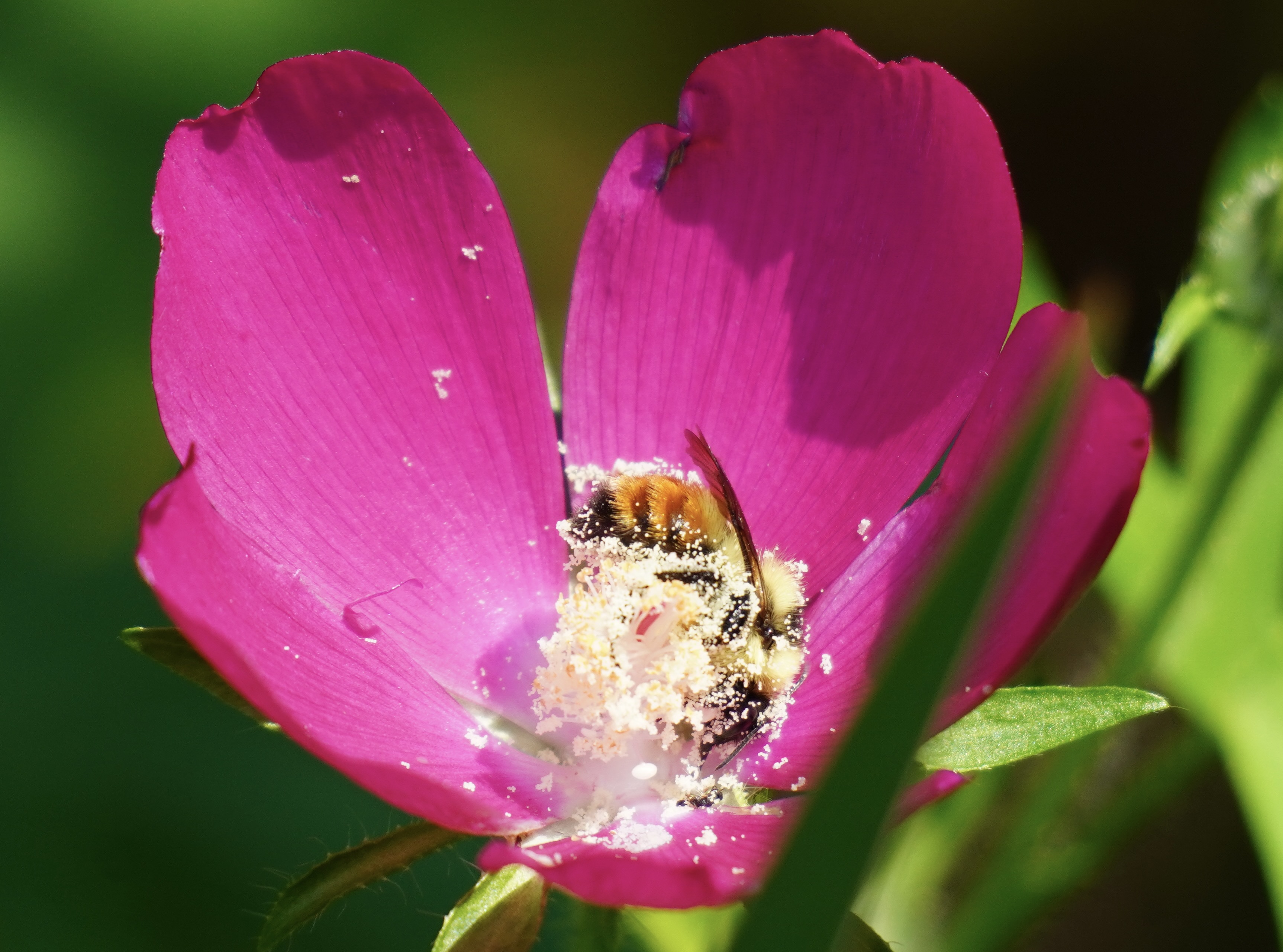
Winecups (July 17, 2023)
A few years ago, I bought several species of Winecup seeds from Prairie Moon Nursery. Winecups are showy prairie native flowers of varying heights — Callirhoe involucrata grows low to the ground, digitata is 3 feet tall, and bushii is in between. It has a tap root and is drought tolerant.
The flowers obviously have lots of pollen. This bee was so covered that I can’t tell what kind it was. I’m growing involucrata near the pond with Field Pussytoes, Wild Petunia and Upland White Goldenrod.
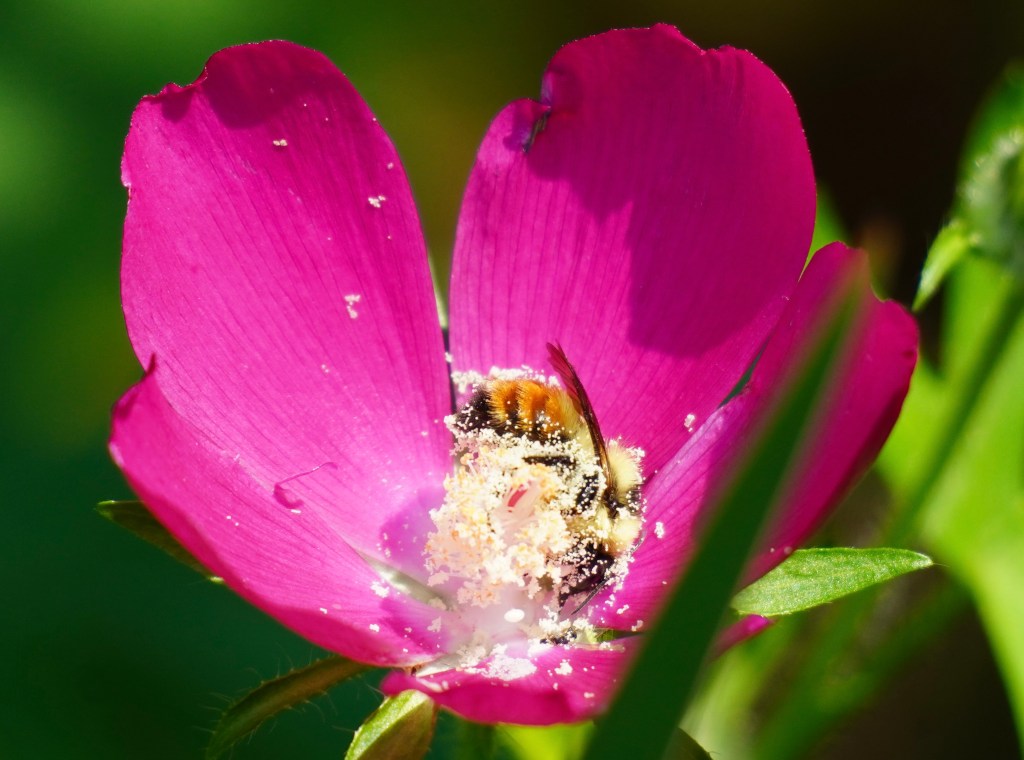

Nervous juvenile birds at the stream (July 17, 2023)
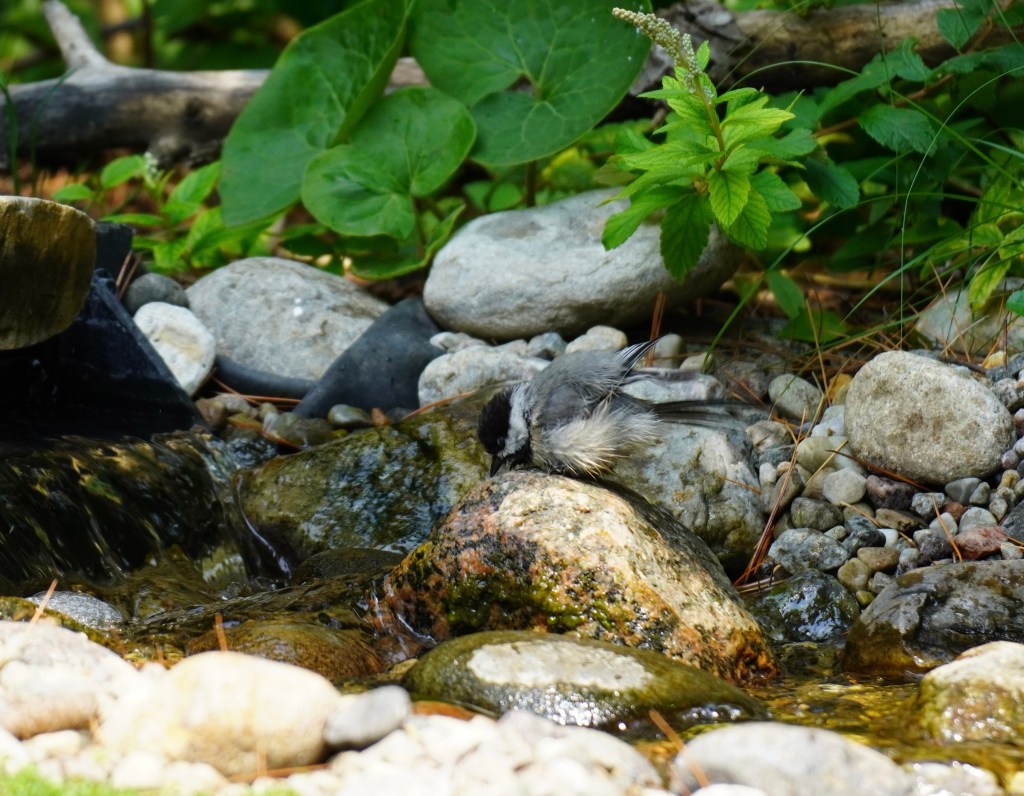
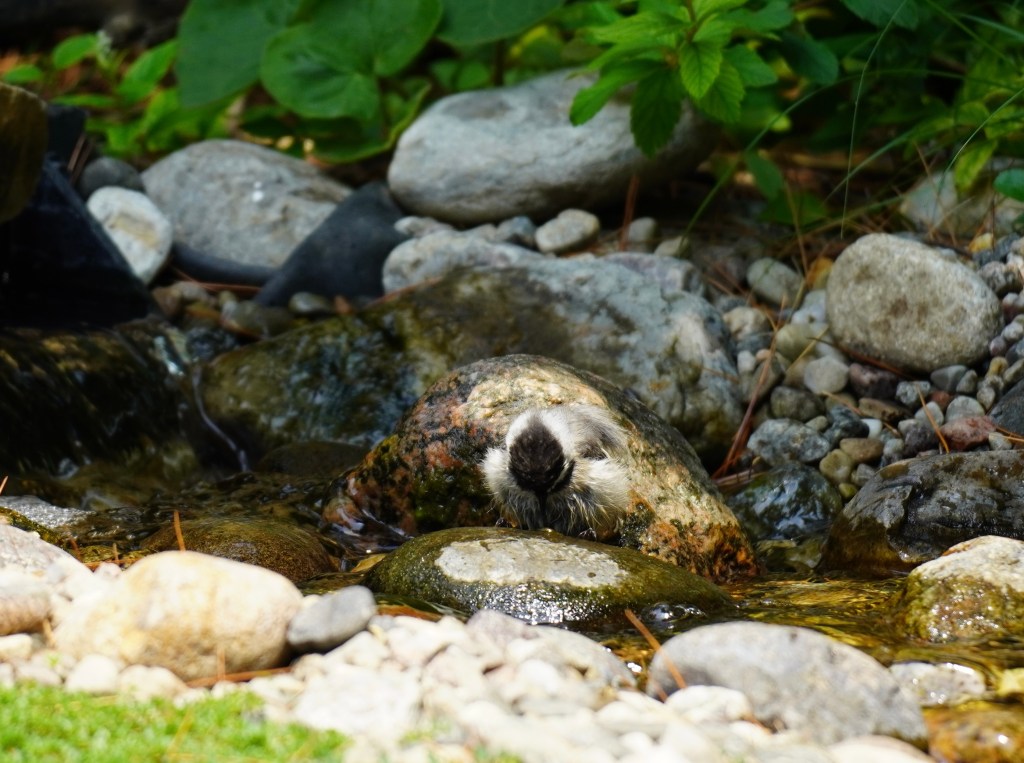
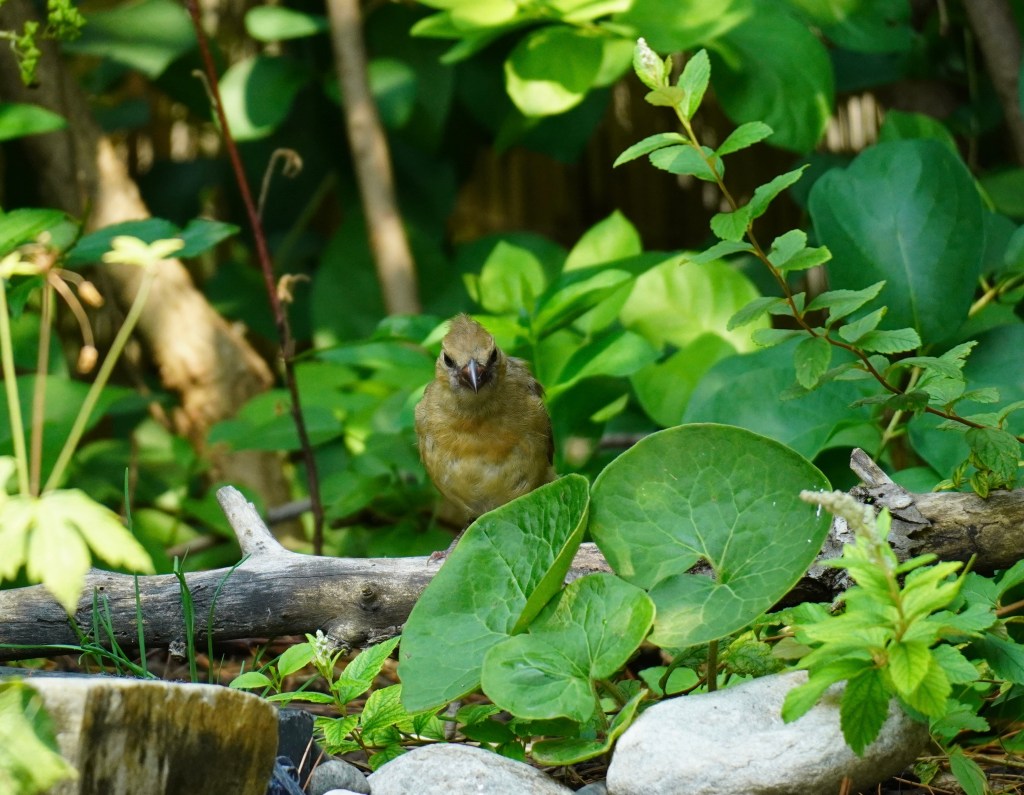
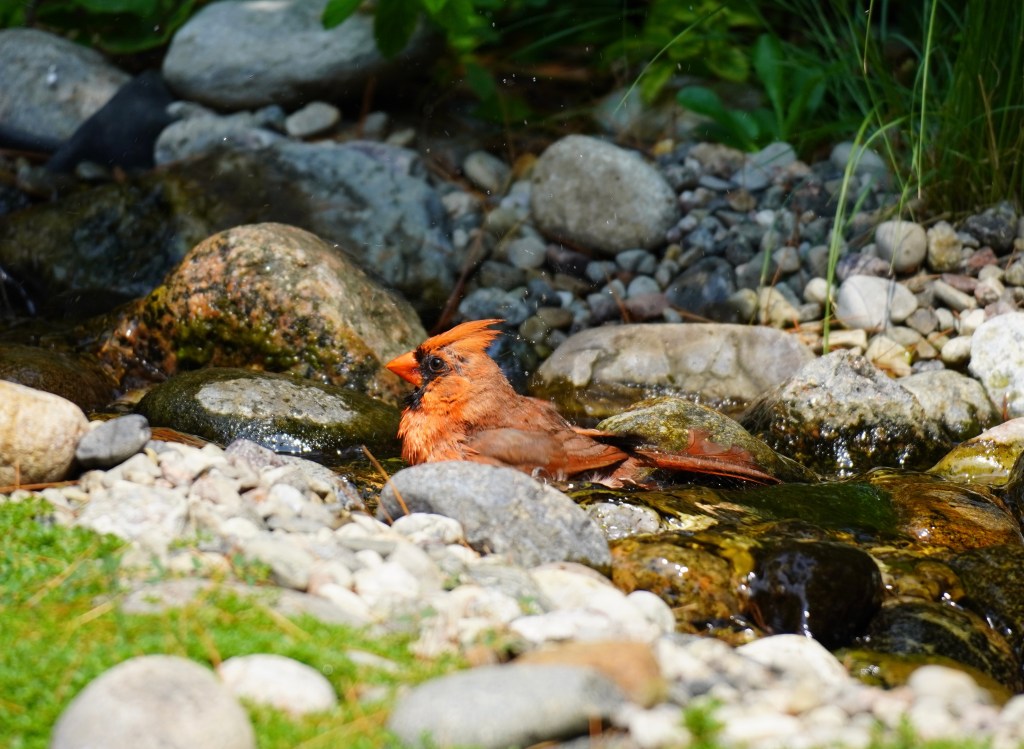
It’s fun to watch juvenile birds at the stream trying to figure out what to do. This young Chickadee first tried to bathe sitting on a rock before it actually went in the water. However, the juvenile Cardinal only watched Dad bathing, but wasn’t brave enough to go in.



Tennessee Coneflower (July 17, 2023)
Last year I grew some Tennessee Coneflowers because they’re short — about 2 feet tall. This year I have my first flowers. The bees like them as much as I do.
The Tennessee Coneflower plants are a lot like Black-eyed Susans. Both are the same height, have hairy leaves, similar-sized flowers, and grow in sunny, dry spots. I really like that the Tennessee Coneflower petals face up slightly, unlike Purple Coneflower’s petals that point down. In my backyard, bees have more interest in the Tennessee Coneflowers than the Black-eyed Susans.

Monarch drinking nectar from liatris flowers (July 17, 2023)
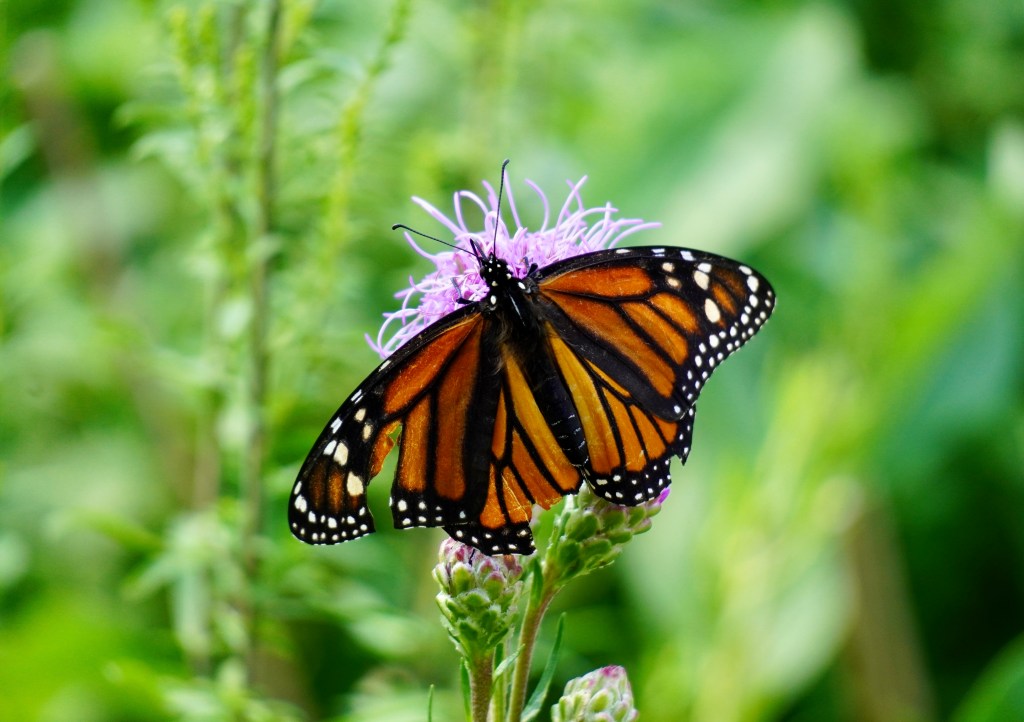
Suddenly in mid-July, there were more butterflies visiting the garden. This Monarch flitted back and forth between the front and back gardens. I’m sure I looked like a fool chasing after it with the camera. One can never have too many photos of Monarchs.
Here, this Monarch was drinking nectar from liatris flowers. I’m pretty sure these are self-seeded Meadow Blazing Stars because they are the earliest liatris to flower. They definitely aren’t Spike/Dense Blazing Stars. They could be Cylindrical Blazing Stars, but I think Cylindrical stalks are shorter and most of mine hadn’t started blooming yet.

Monarch laying eggs (July 23, 2023)
This Monarch laid lots of eggs on Swamp Milkweed by the pond and in the garden. I collected 4 eggs to raise outside in mesh cages because most of the caterpillars seem to get eaten.


Chokecherries in the hedgerow (July 16, 2023)
Over the past 5 years, I’ve been planting native shrubs around the perimeter of our yard to provide flowers for pollinators, as well as insects and fruit for birds.
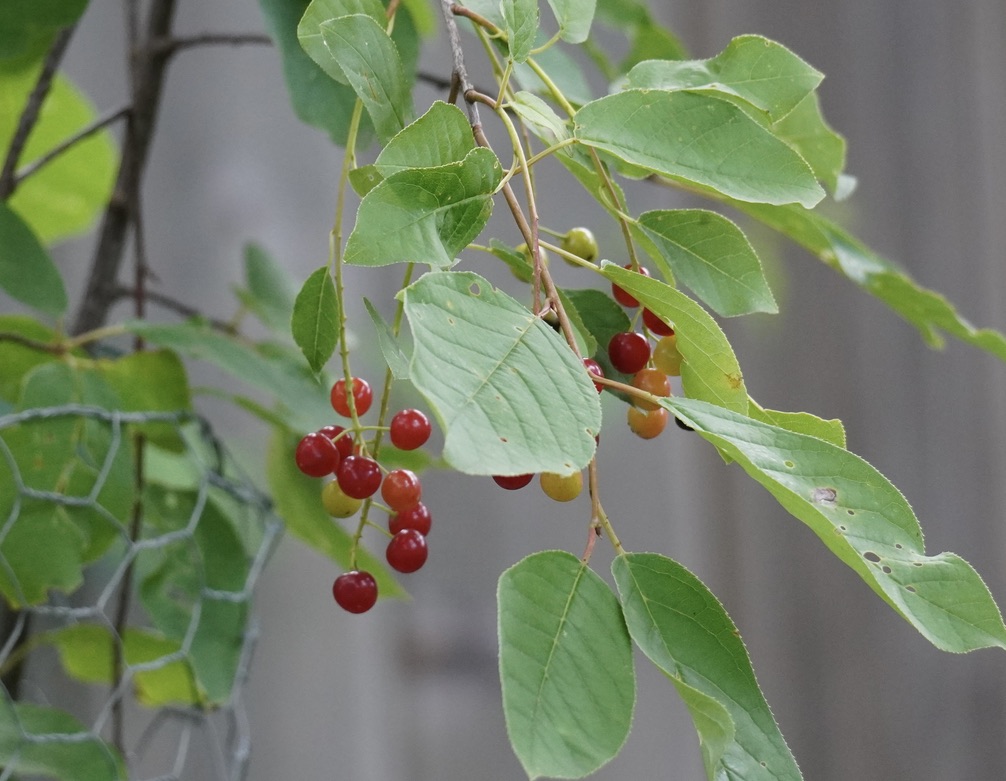
The first shrubs to provide fruit are Serviceberries and Red Elderberries. Next, the berries on Red Osier Dogwoods begin to turn white, and are eaten by chipmunks and Red-eyed Vireos. Chokecherries also begin to ripen and will turn dark blueish-purple when ready to eat.
Black Swallowtail laying eggs on Canada Honewort (July 19, 2023)
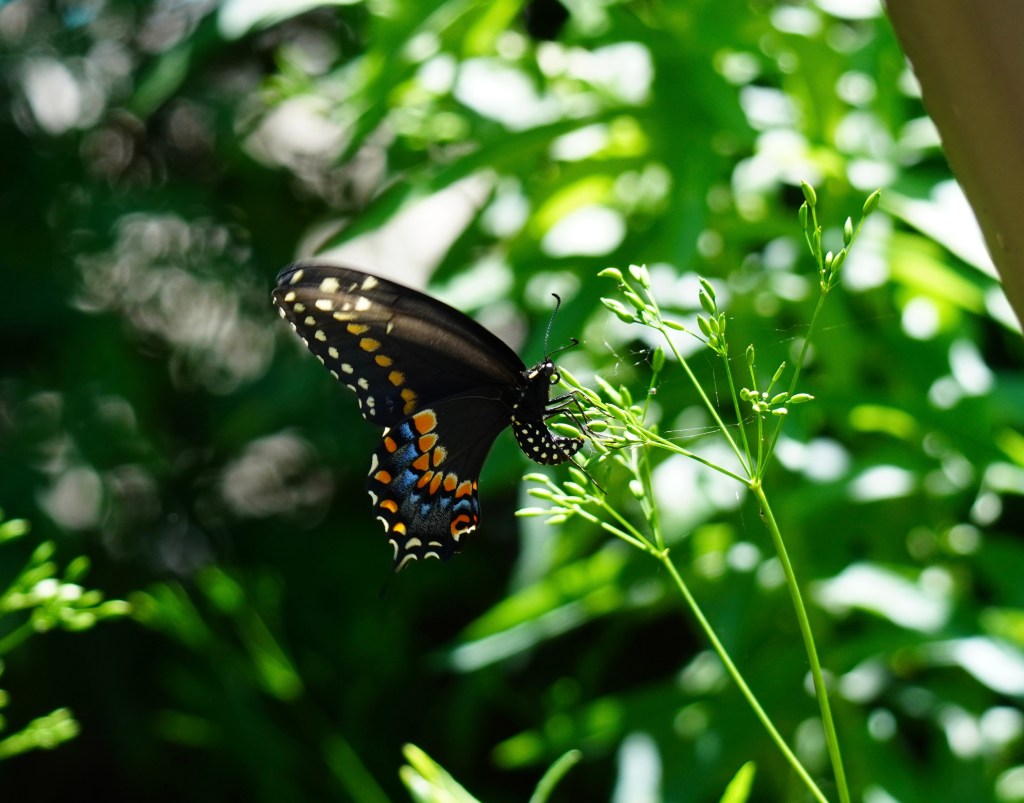
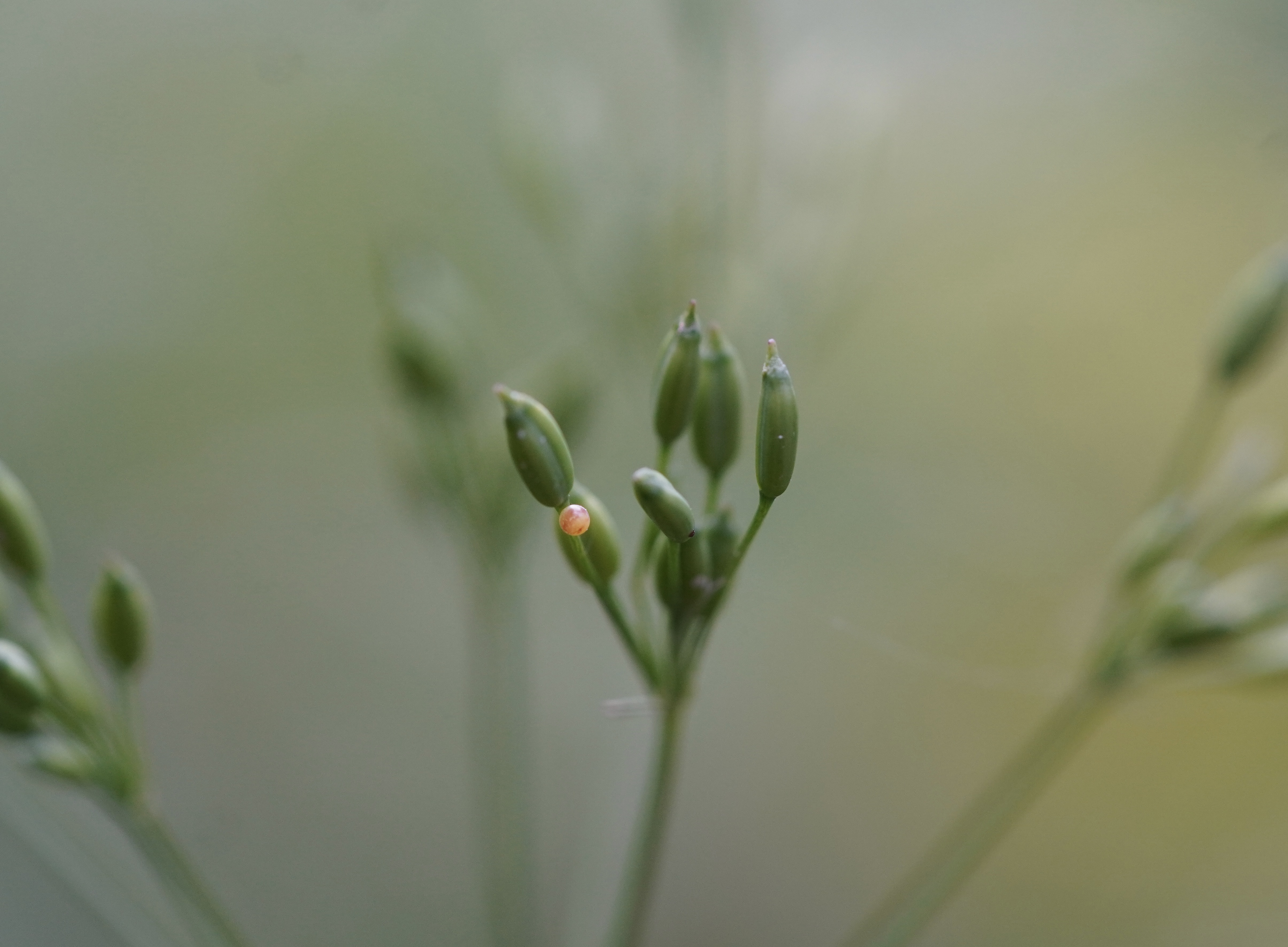
I watched this Black Swallowtail lay eggs on two of its native host plants — Heart-leaved Alexanders, a prairie plant for sunny spots, and Canada Honewort that grows in shadier areas.
It’s interesting that it laid its eggs on the seed heads of both plants, instead of on the leaves. When the eggs hatch, the caterpillar will have a long journey to reach the leaves.
A fancy caddisfly (July 23, 2023)
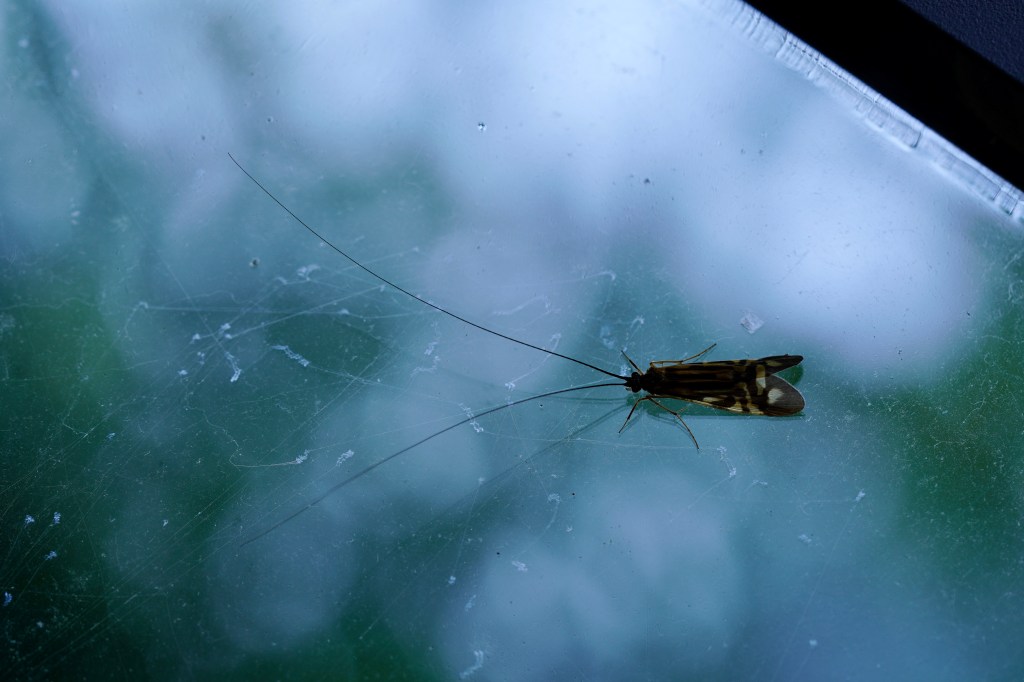
Caddisflies are related to butterflies and moths, but their larvae are aquatic. Perhaps this fellow spent its early days in our pond. Here it is hanging out on the greenhouse. It certainly had impressive antennae. I believe it was either a Glossy Wing Sedge Caddisfly or a Zebra Caddisfly.

Skunk looking for grubs in the back lawn (July 28, 2023)
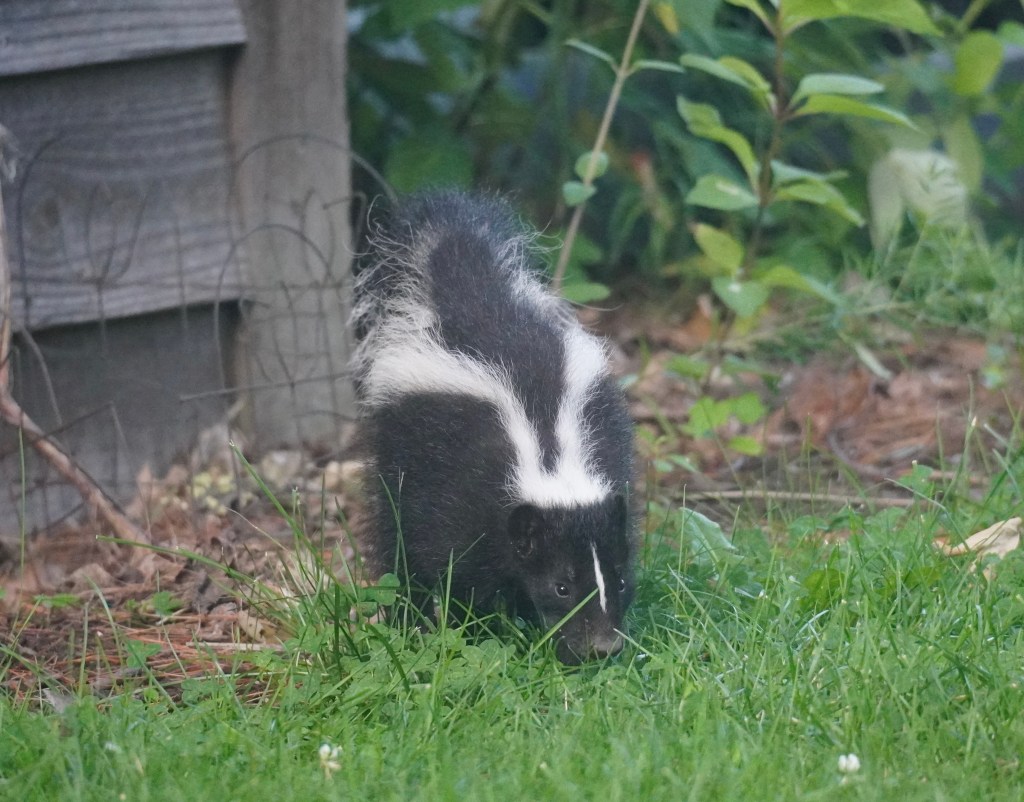
One evening when we were eating dinner outside, a skunk squeezed under the back gate, sauntered down along the fence, and snuffled around the lawn looking for grubs. It’s amazing that it could fit through such a small space. Needless to say, we sat very still and hung onto the dog.


So many fabulous pictures, Berit! Such a fascinating time in your garden. I absolutely love the idyllic little stream! That first picture of a bee was amazing, too. Thanks for the ever interesting post. Enjoy the last weeks of summer.
LikeLike
Love your garden. Thank you for sharing your updates. They’re always a pleasure when they come in. I especially love your eye catching plant combos. You’re doing a great job building something beautiful with the natives and providing for wildlife.
LikeLike
Thanks for the kind words about my garden and photos. Gardening for wildlife adds a whole extra level of enjoyment. I’m so grateful that I discovered gardening with native plants.
LikeLike
Your email always makes my day . I signed up for the Monarch tagging program with Monarch watch . If you do not have any and want to tag your reared Monarchs , I will give you the tags to do it. I will be tagging the wild ones in my garden and will move on to Fletcher, CEF and the Monarch way station near the dump.
Best ,
David On Fri, Aug 25, 2023 at 12:19 PM The Corner Pollinator Garden and Wildlife Habit
LikeLike
I’m so glad that you enjoy my garden photos! My Monarchs have all flown away now. I am interested in learning how to tag them for next year. Where did you learn how to do it, and where did you get the tags?
LikeLike
Monarchwatch.org has all the information
On Sat, Aug 26, 2023 at 10:40 PM The Corner Pollinator Garden and Wildlife Habit
LikeLike
I released this one yesterday .
LikeLike