Eight years ago, when I began learning about native plants, I read an out-of-print book called Noah’s Garden: Restoring the Ecology of Our Own Backyards. In it, Sarah Stein discussed the wildlife habitat potential of suburban hedgerows. So I began planting native shrubs around the perimeter of our yard to create my own hedgerows. I chose a wide variety of native species for sun and shade to provide berries and shelter for birds.


In Noah’s Garden, Stein explained that if we planted shrubs around each of our yards, they would combine to create habitat corridors for wildlife (pages 48 and 50).
For birds and pollinators
Although I planted shrubs for birds, I now realize that they also provide continuous food for pollinators throughout the spring. When I first began planting for pollinators, I struggled to find early spring blooms. It turns out that the abundant spring flowers on native shrubs and trees are a critical early food source for pollinators. Instead of only focusing on herbaceous plants on the ground, I had to look up high too. Since shrubs and trees are so big, they produce a lot of flowers that provide nectar and pollen. When they bloom, the insect activity around them is impossible to miss.
What happens when
Since I’m interested in phenology — the study of what happens when in nature — I kept track of what was blooming in my yard from April to June in 2024. (By the end of June, there were so many plants blooming, I couldn’t keep up with them anymore, so I stopped keeping track.) I was pleased to see a continuous sequence of blooming shrubs, as well as a lot of overlap. Bloom times differ every year, depending on the weather; 2024 was a warmer early spring. I also observed that bloom time within a single shrub species varies depending on how much sun they receive, and whether they are a local or more southern ecotype.
Keep in mind that I’m writing this blog post in 2025 based on my scribbled notes and photos from last year. Also, I didn’t record the full bloom time for each shrub from start to finish. Consider this a rough guide to the sequence of shrub bloom times in my yard in Ottawa.
April 7 to 13: Pussy Willow and American Hazelnut
Every year, the first shrubs to bloom are Pussy Willows. For me, they’re the sign that spring is finally here, regardless of what the calendar says. I have a cluster of 3 in one corner of the backyard. In 2022, I wrote a blog post about them called “Pussy Willows: pollinator and bird magnets“. Without fail, my Pussy Willows are covered in clouds of insects every year.
I have Beaked and American Hazelnuts. In the past, rabbits have eaten them each winter, so they haven’t grown much. I did surround them in chicken wire a couple of years ago, so I’m finally seeing more growth, flowers and catkins, but I haven’t had nuts yet.


Photo 1: native bee on a Pussy Willow catkin (April 2022), 2: female American Hazelnut flower, and 3: male American Hazelnut catkin (both April 11, 2024).
April 14 to 20: Red Maple, Spicebush, Canadian Fly Honeysuckle
While the first few weeks of April were unusually warm, the weather turned cooler in mid-April, slowing plant growth and flowering. Sadly my Pussy Willows bloomed in a quick flush and were done after only a week.
My Red Maple tree was next to bloom. It’s getting too tall to see the insect activity close-up, but I could see moving black dots — probably solitary bees and flies. The Spicebushes and Canadian Fly Honeysuckles were also blooming. The Spicebush shrubs attracted small pollinators, while the Fly Honeysuckles attracted big bumblebee queens.


Photo 1: native bee visiting Red Maple flowers (May 2, 2020), 2: fly on Spicebush flowers (April 18, 2024), 3: Bumblebee queen drinking nectar from Fly Honeysuckle flowers (April 8, 2023).
April 21 to 27: Red Elderberry and ‘PJM’ Rhododendron
This week, the Red Maple, Spicebushes and Fly Honeysuckles continued blooming.
Red Elderberries flowered in the sunnier areas, but others on the north side of our cedar hedge remained in bud. I hardly ever see insects visiting these flowers, but something must be pollinating them because they produce lots of red berries.
My old non-native ‘PJM’ Rhododendron, leftover from my ornamental gardening days, is a favourite of queen bumblebees. They drink nectar from its gaudy pink flowers, and even crawl around spent flowers that have fallen on the ground.

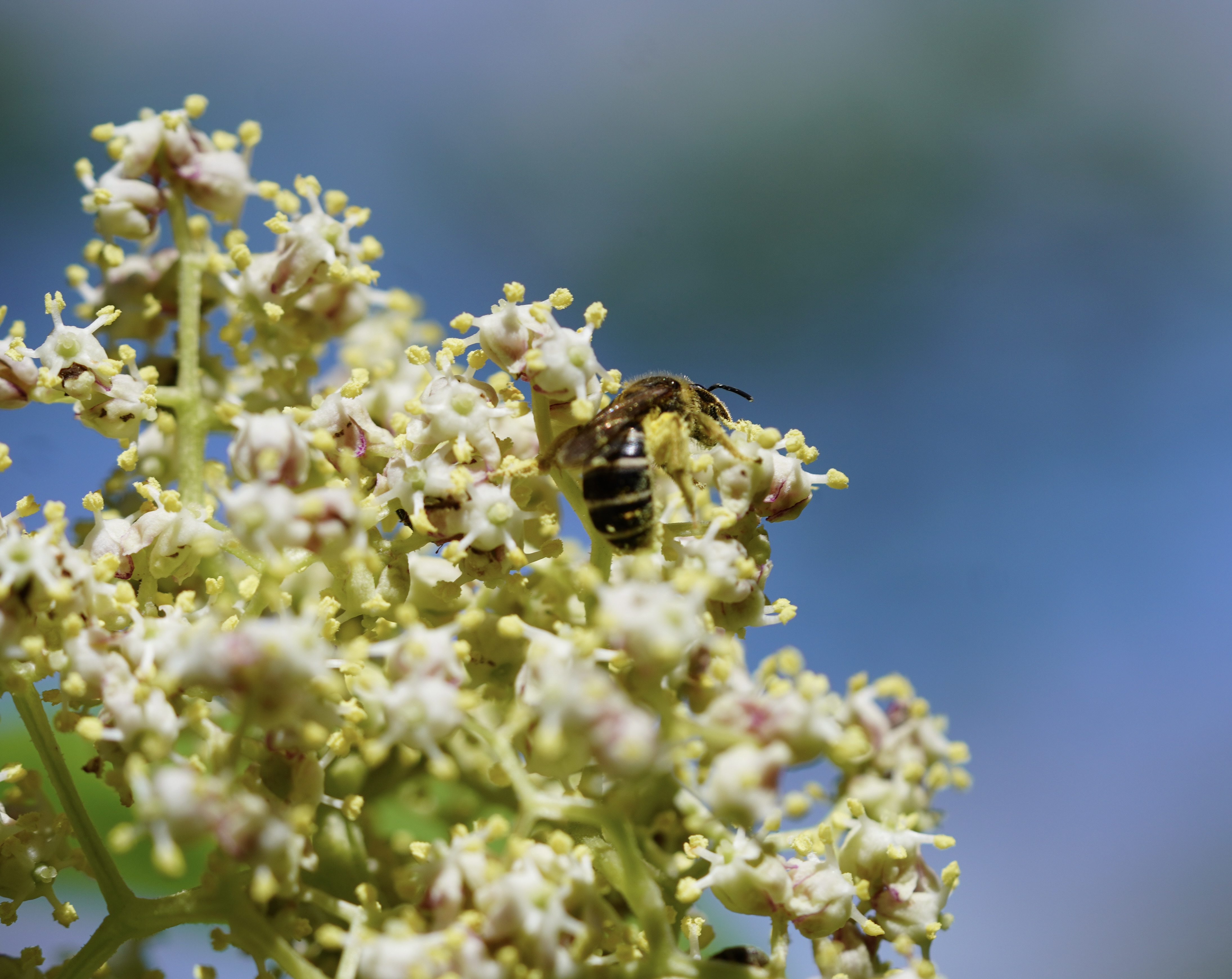

Photo 1: Red Elderberry flower clusters (May 4, 2024); 2. solitary bee on Red Elderberry flowers (May 6, 2024); 3. a queen bumblebee drinking nectar from ‘PJM’ Rhododendron flowers. (May 10, 2022).
April 28 to May 4: Serviceberry and Wild Plum
Red Elderberries and the non-native Rhododendron were still flowering.
In the sunny spots, Wild Plums and Serviceberries bloomed. While my Serviceberries do attract bees, the Wild Plums are always absolutely covered in queen bumblebees, solitary bees, and other insects. In my yard, Pussy Willows and Wild Plums are the most popular shrubs with pollinators.


Photo 1: a bee visiting Serviceberry flowers (May 10, 2023); 2. Two bumblebee queens collecting pollen from Wild Plum flowers (May 12, 2022); 3. and 4. solitary bees on Wild Plum (May 15, 2022).
May 5 to 11: Redbud, ‘Prairie Fire’ Crabapple, Hawthorn, Chokecherry, and non-native Common Lilac
Red Elderberries and Wild Plums that grow in more shade continued to flower.
Over the next few weeks a lot of mature shrubs and trees bloomed. It was challenging to keep track of them all, on top of spring gardening chores. My Redbuds attracted mostly bumblebees and a few solitary bees, while the old, ornamental ‘Prairie Fire’ Crabapples attracted large numbers of many pollinator species.
Both the Hawthorns and Chokecherries were in our yard long before we moved here. They’re all too tall for me to see insect activity up close — even with a zoom lens — but they produce abundant blooms and fruit every year. The old, white Common Lilac hedge isn’t very attractive to insects, but I did see a few butterflies visiting their flowers.


1. Solitary bee at Redbud flowers (May 13, 2024); 2. Tiny bee visiting ‘Prairie Fire’ Crabapple blossoms (May 16, 2024); 3. Hawthorn flowers (May 13, 2024); 4. Chokecherry flowers on a new, smaller tree (May 18, 2022); 5. Red Admiral butterfly drinking nectar from lilacs (May 16, 2024).
May 12 to 18: Bladdernut, Limber Honeysuckle vine, Fragrant Sumac, and Pagoda Dogwood
Shrubs in part-shade were the highlights this week. While all 3 of my American Bladdernuts were covered in little white bells, I didn’t notice any bees visiting them. The dogwoods also began blooming, starting with Pagoda Dogwoods in the shade garden and on the north side of our cedar hedge. A variety of bees visited their flat flower umbels. The Limber Honeysuckle vines that are tied to the trellises in the shade garden were also in full bloom and frequented by bumblebee queens. (Yes, I know the Limber Honeysuckle is a vine and not a shrub, but they are woody so I’ve included them here.)
Fragrant Sumacs bloomed in the sunny areas of the yard — along with the Hawthorns, Chokecherries, crabapples, and lilacs that continued to flower.


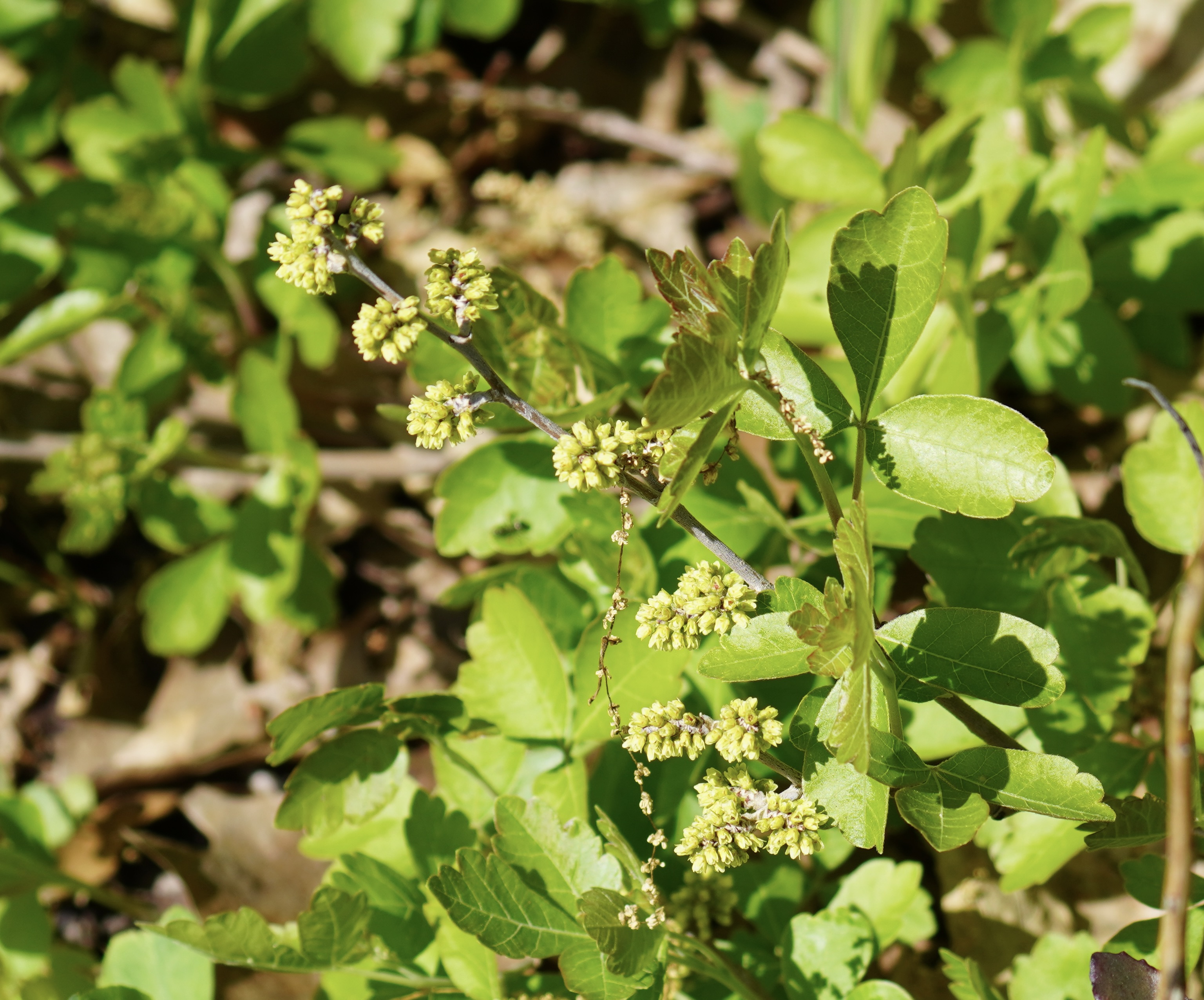
Photo 1. American Bladdernut (May 19, 2024); 2. Bi-colored Green Sweat Bee visiting Pagoda Dogwood (May 25, 2022); 3. Fragrant Sumac flowers (May 25, 2023); 4. and 5. Limber Honeysuckle (May 24, 2022); .
In my next blog post, I’ll continue listing the shrubs that bloomed each week in my yard from the end of May to the end June.

 The Corner Pollinator Garden and Wildlife Habitat
thanks Beryl for the reminders of spring
LikeLike
Very interesting article Berit. I have always enjoyed watching the bees on the flowering pussy willows each spring. And I have photographed many pollinating insects on the flowers of trees and shrubs over the years. Some at home, some at my cottage, some along our local Black Rapids Creek NCC trail. etc. I am surprised you are able to grow pussy willow shrubs in your garden. Do you have a wettish area where they grow? I would think it was too dry in my yard for pussy willows to grow. I have attached a few of my photos of insects pollinating shrubs and tree flowers. Some of the insect identifications I have had help with from my friend Christine Hanrahan who is a real expert on insects as well as nature in general. She has an interesting photo site on Pbase which I often use for help in identifying insects. She has thousands of photos on it in various galleries. https://www.pbase.com/laroseforest
I also have lots of photos over the years of insects in the various Pinhey Dunes sites. I was just looking at some of them recently and wondering if the Pinhey Dunes group would be interested in any of them. I have lots of photos of Tiger Beetles there as well as sand wasps, robber flies, etc. Some , I have passed along to Pete Dang in the past when I was volunteering there. I hope to get back there this summer and maybe help with weeding and planting as well as taking more photos. I was very impressed in the last Friends of the Dunes newsletter at how many butterflies and their caterpillars were found on the Dunes plants last summer.
I would also love to show you my gardens which are largely native plants and herbs which attract lots of pollinators. And unfortunately last summer way too many of those awful Japanese beetles which were really hard on my small wild plum shrubs.
Claudia Burns
On Mon, Mar 3, 2025 at 9:48â¯PM The Corner Pollinator Garden and Wildlife Habit
LikeLike