There was a lot of pollinator and bird activity in the yard during the last weeks of August.
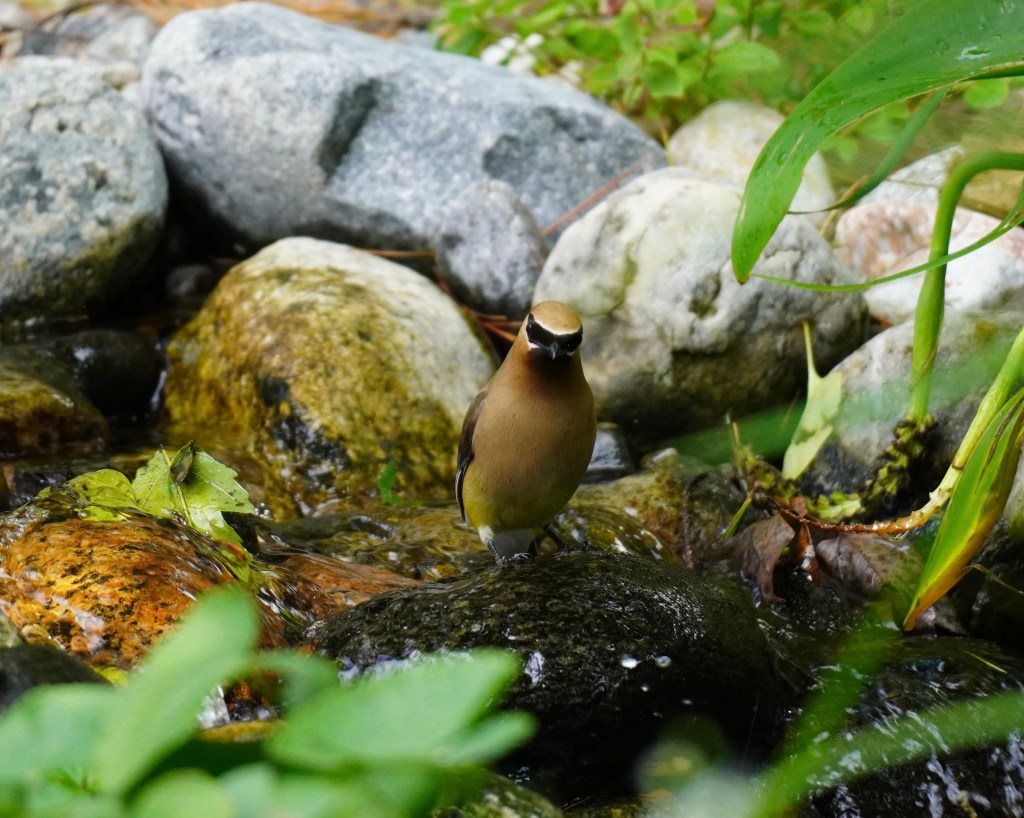
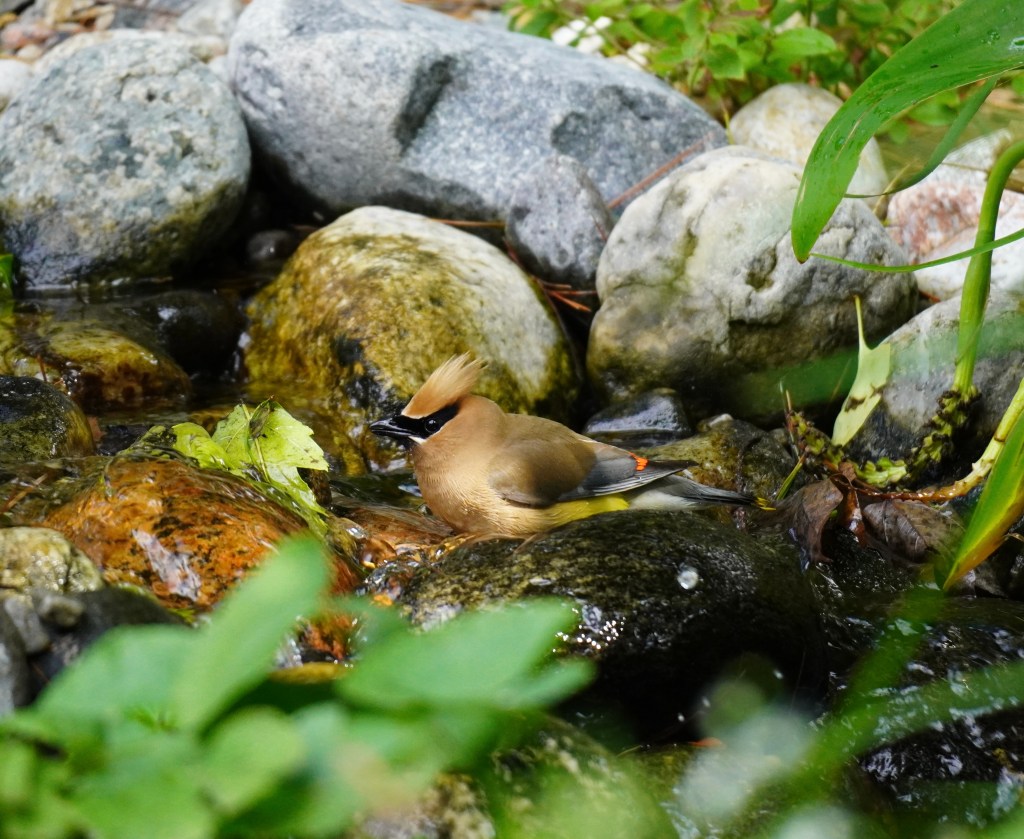
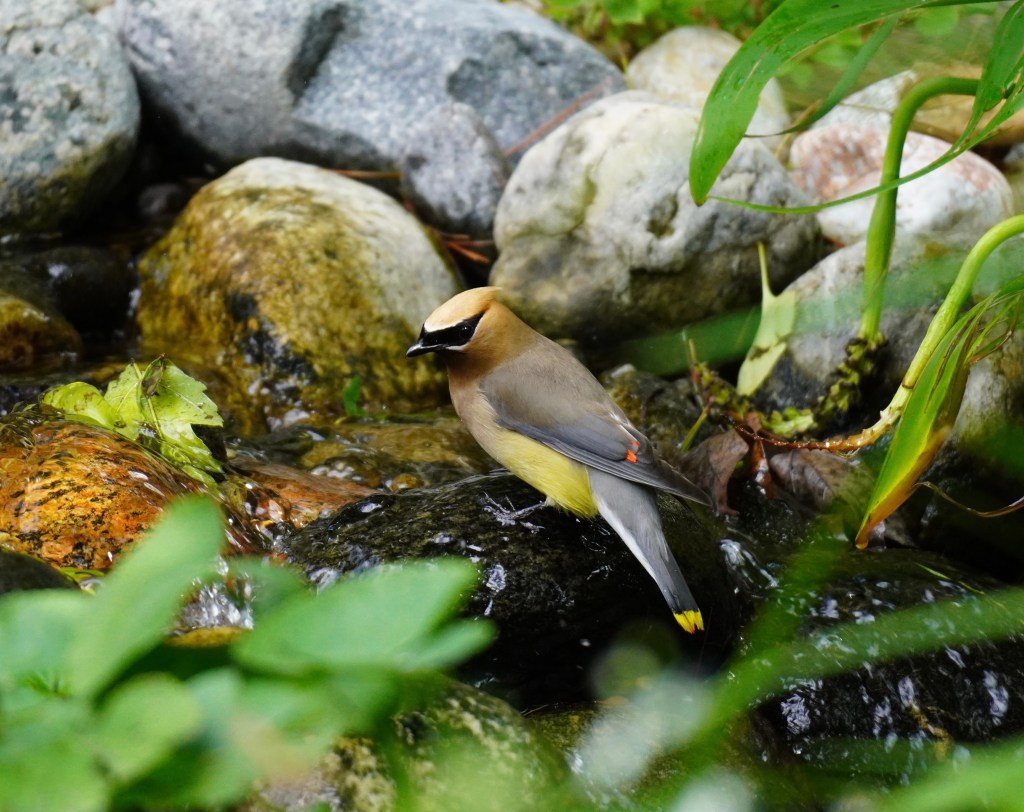
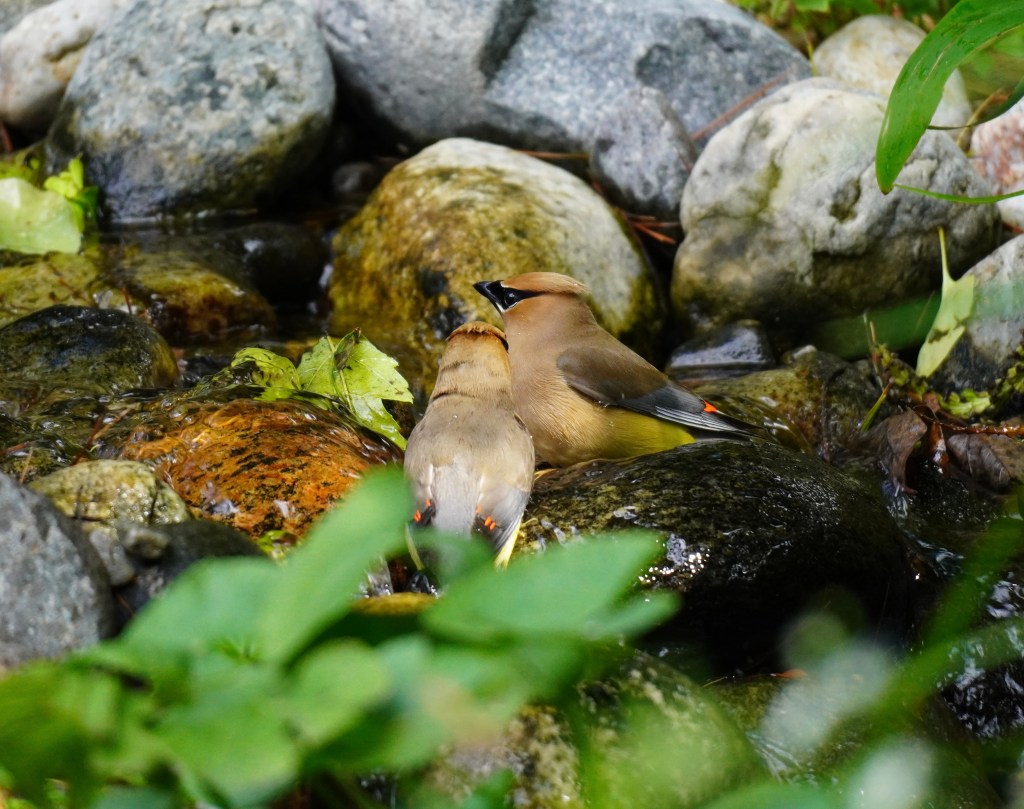
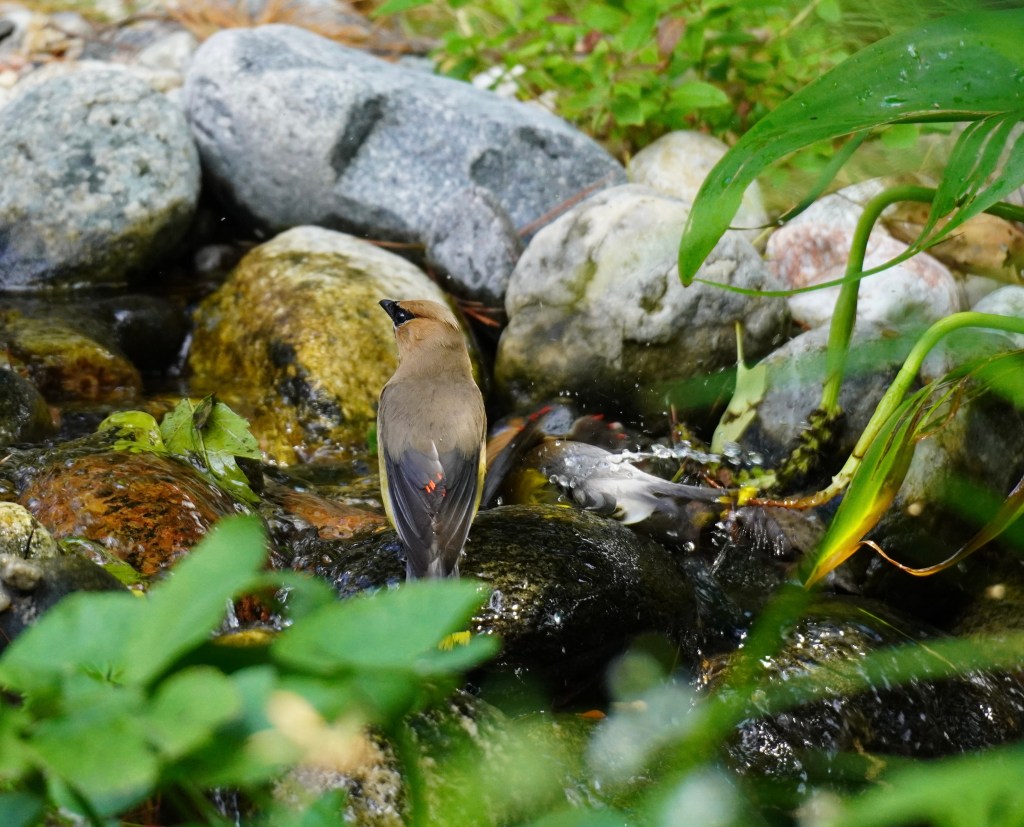
Cedar Waxwings visit the stream (August 16, 2023)
I often hear Cedar Waxwings around, but rarely see them at the stream. I was lucky enough to see this pair.
They both insisted on bathing at the top of the waterfall just above the pond, when there was plenty of room elsewhere. After a bit of squawking at each other, they agreed to share the space.
Over the past couple of years, neighbours have cut down the White Mulberry trees on our street. I wonder if we’ll see the Cedar Waxwings around in the future with one of their favourite fruit gone. White Mulberries are invasive, but I’m sure they were cut down because they’re messy. Our Black Elderberries in the hedgerow are laden with fruit, but I didn’t see the Cedar Waxwings eating any.
I planted 2 American Mountain Ash trees to provide Cedar Waxwings with another favourite fruit.

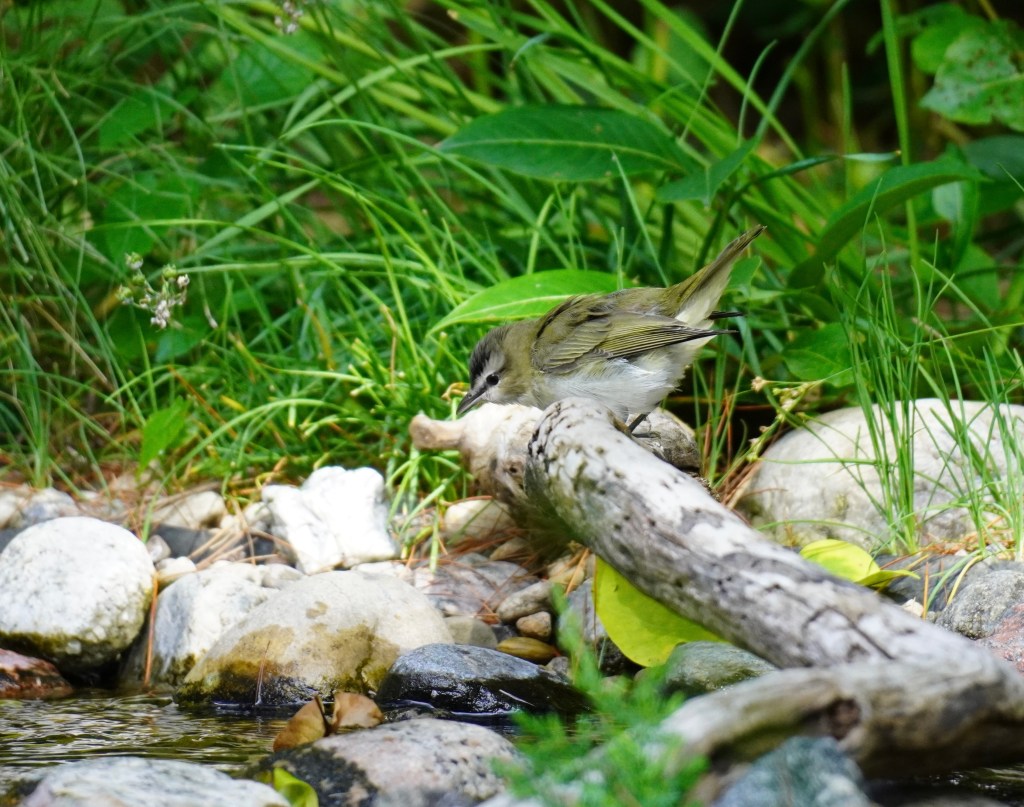
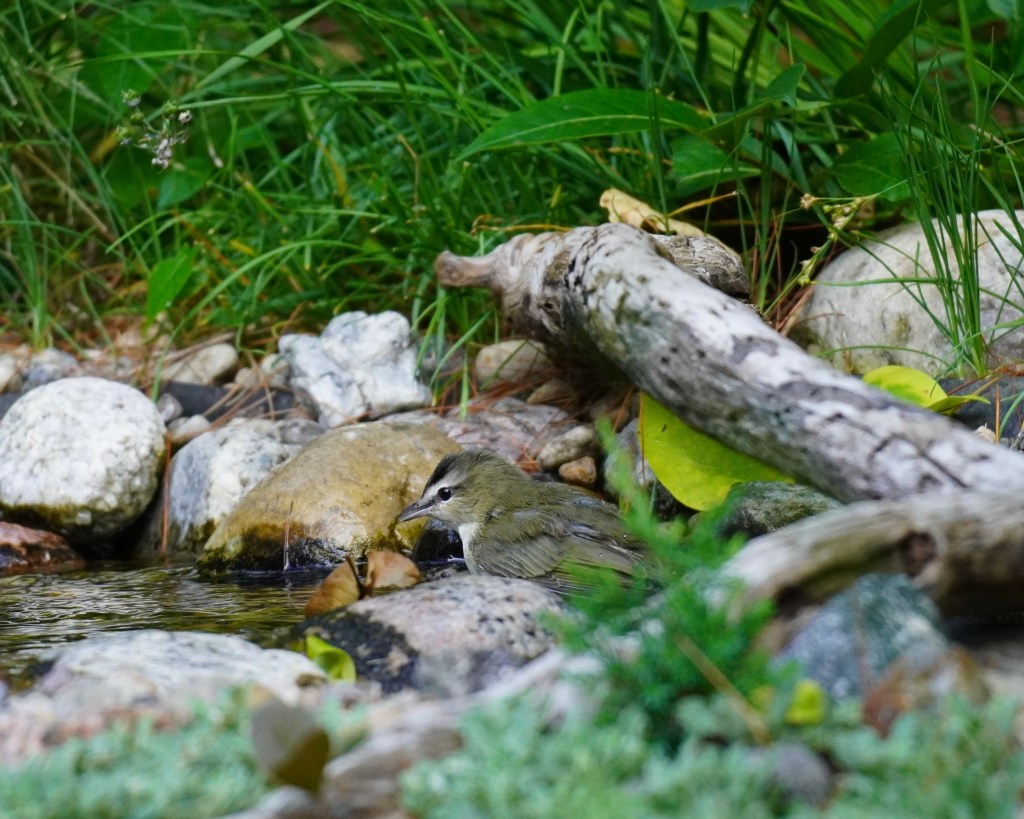
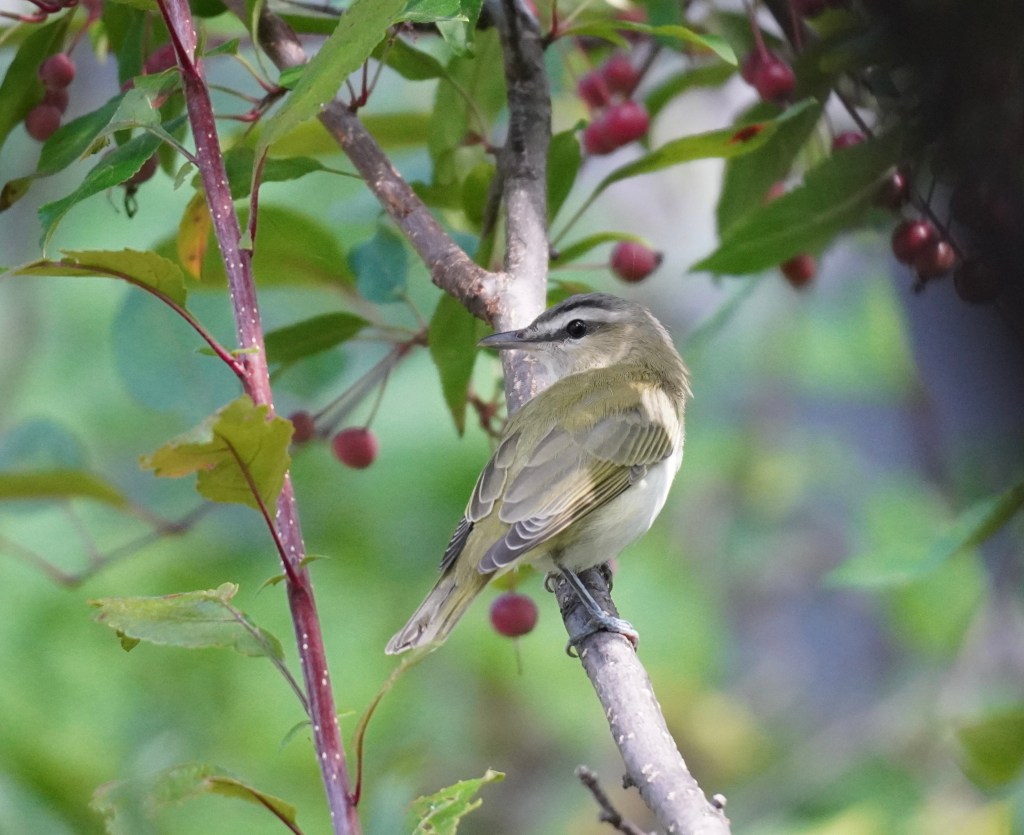
Red-eyed Vireo Juvenile visits the stream (August 16, 2023)
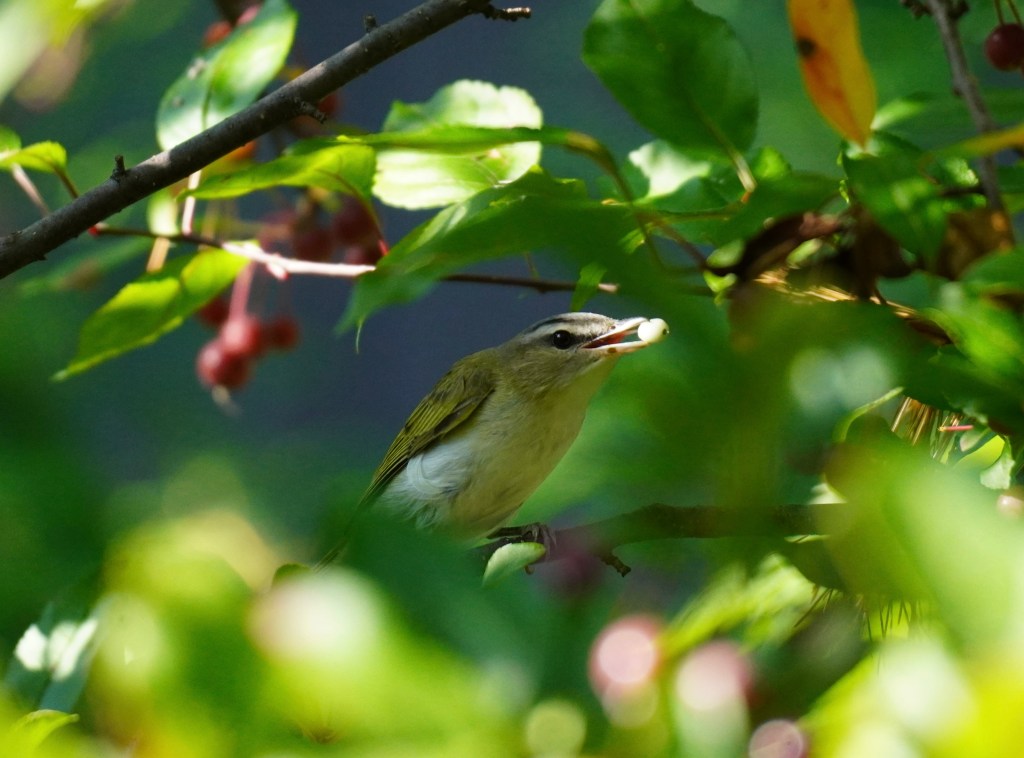
There are at least 2 Red-eyed Vireos that visit the stream. These photos show a juvenile visiting while a parent watches from the crabapple tree nearby.
The juvenile repeatedly jumps into the water, splashes around for a bit, and then hops out again. The adult Red-eyed Vireos do what I call ‘silly dipping’ — they launch from a branch above the stream, dive into the water, and back out so quickly that you almost miss it. I’ve never seen any other bird bathe in such a manner.
The parent later picked a Red Osier Dogwood berry, and hopped into the crabapple tree with it. It then tipped its head up and swallowed the berry whole. Vireos really like ROD berries.


Fireweed seeds (August 20, 2023)
The Fireweed patch near the hedgerow is going to seed. The opened pods remind me of octopus tentacles.

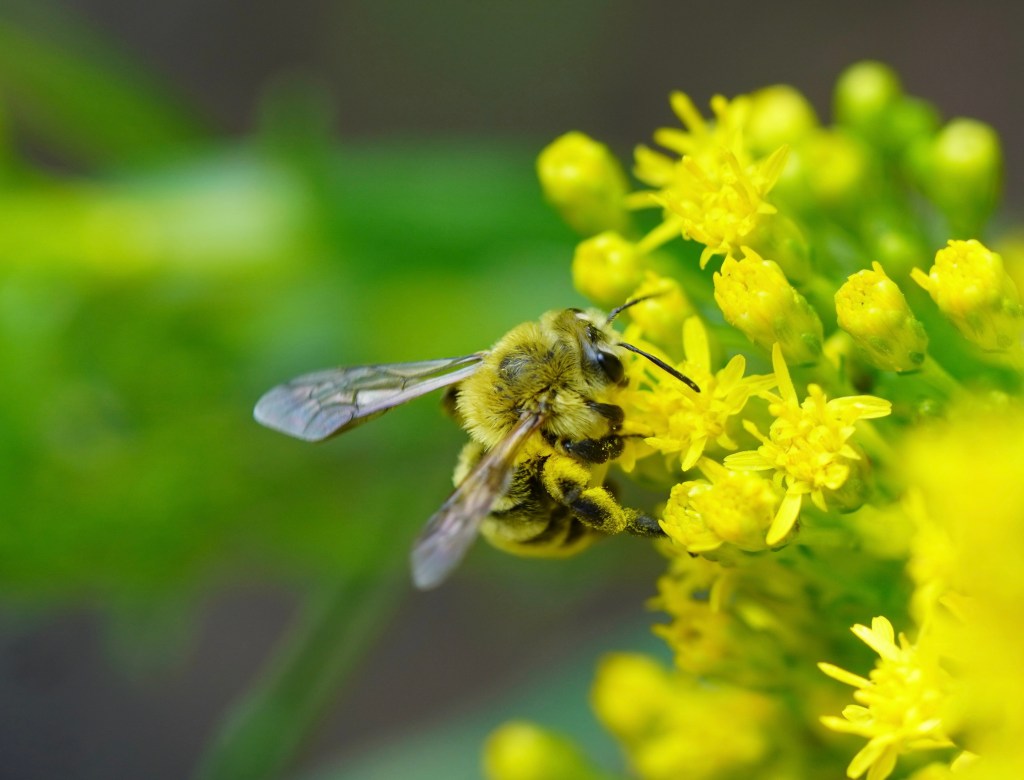
Hairy-banded Mining bee, possibly (August 20, 2023)
At first, I thought this was a dark honeybee. Whatever it was, I knew it was a different bee from what I usually see, so I took a lot of photos.
While inspecting my photos, it’s clear that this bee is quite furry, but isn’t a bumblebee. I think it is some kind of long-horned bee. The ones I’ve seen in the past had green eyes though.
It’s visiting Ohio Goldenrod.
iNaturalist identified this as a Hairy-banded Mining Bee. One of its preferred pollen sources is goldenrods, so it shows up in late summer.
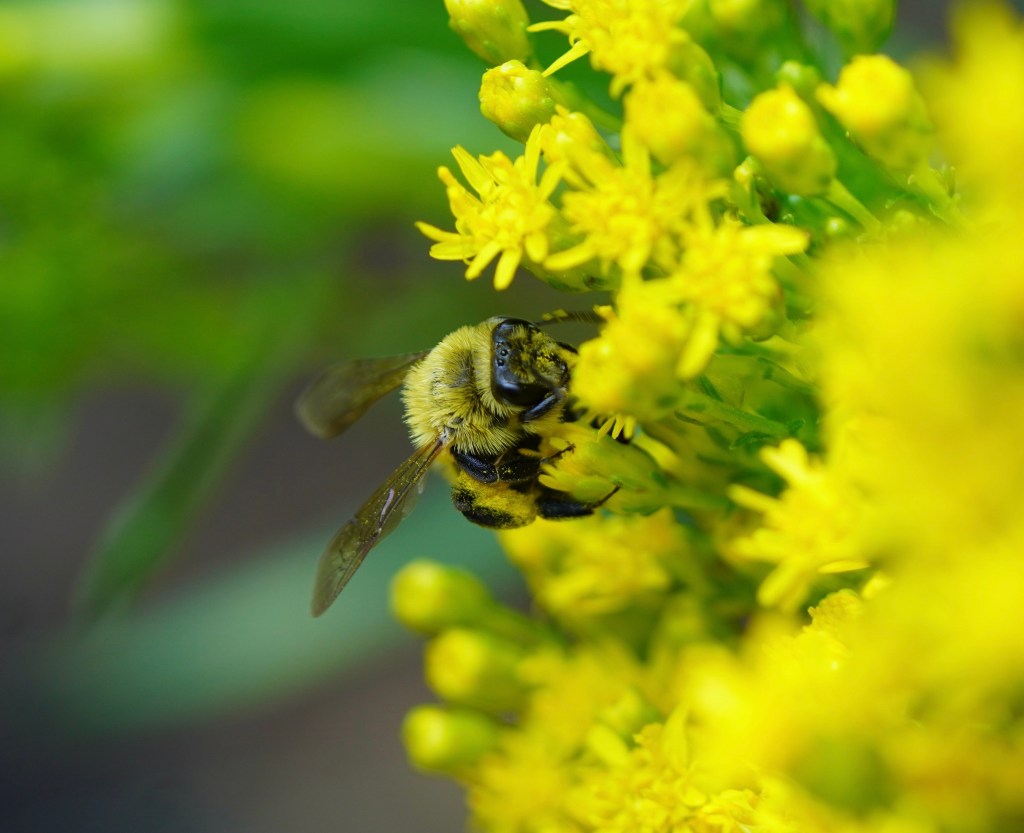

Bees’ favourite plant combo (August 20, 2023)
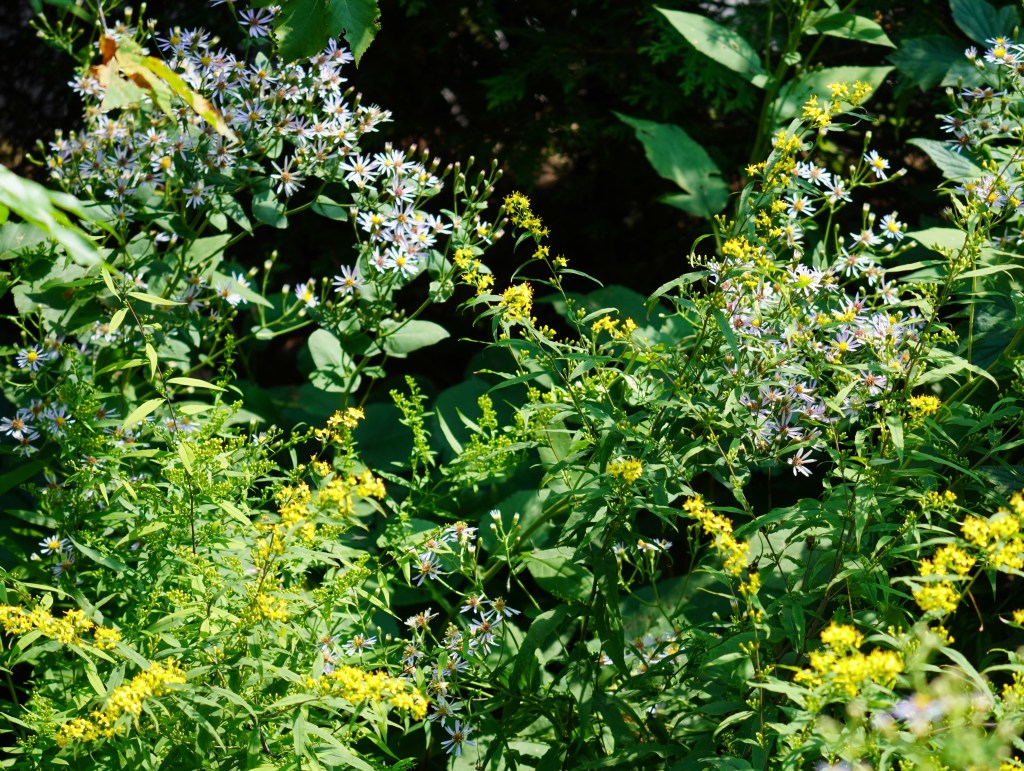
I’ve been complaining that there aren’t many bees in the back garden. Well, I found them — they’re all in this patch of Large-leaved Asters and Blue-stemmed Goldenrod.
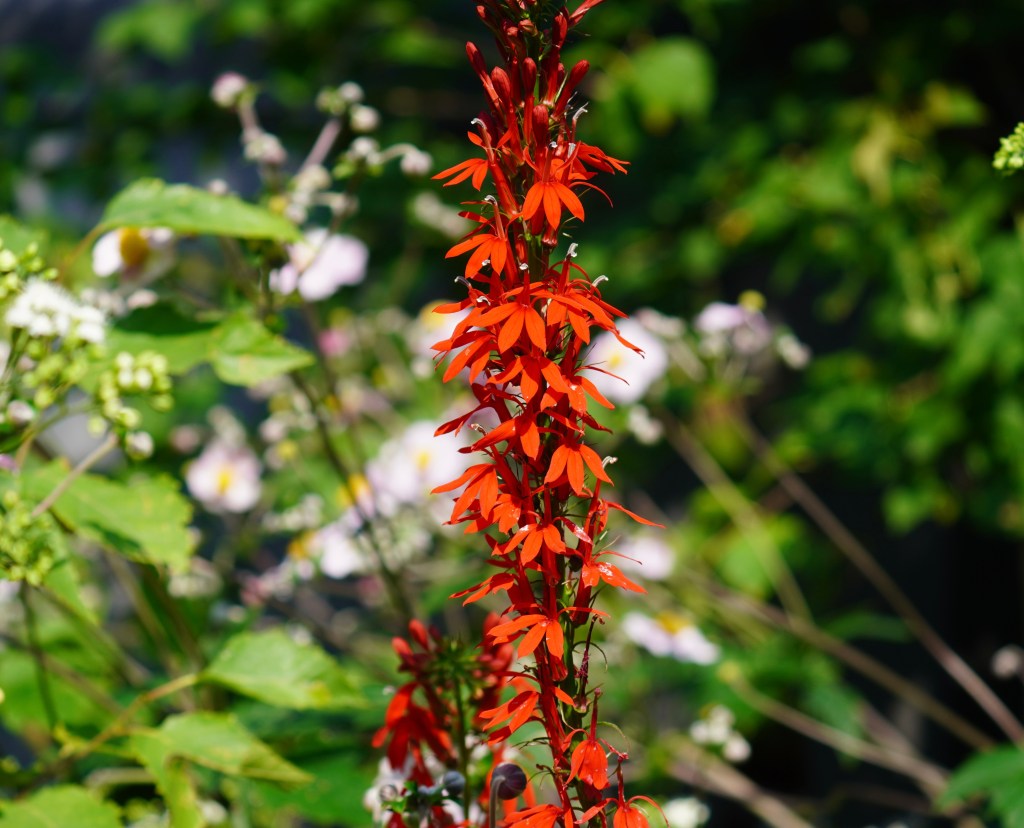
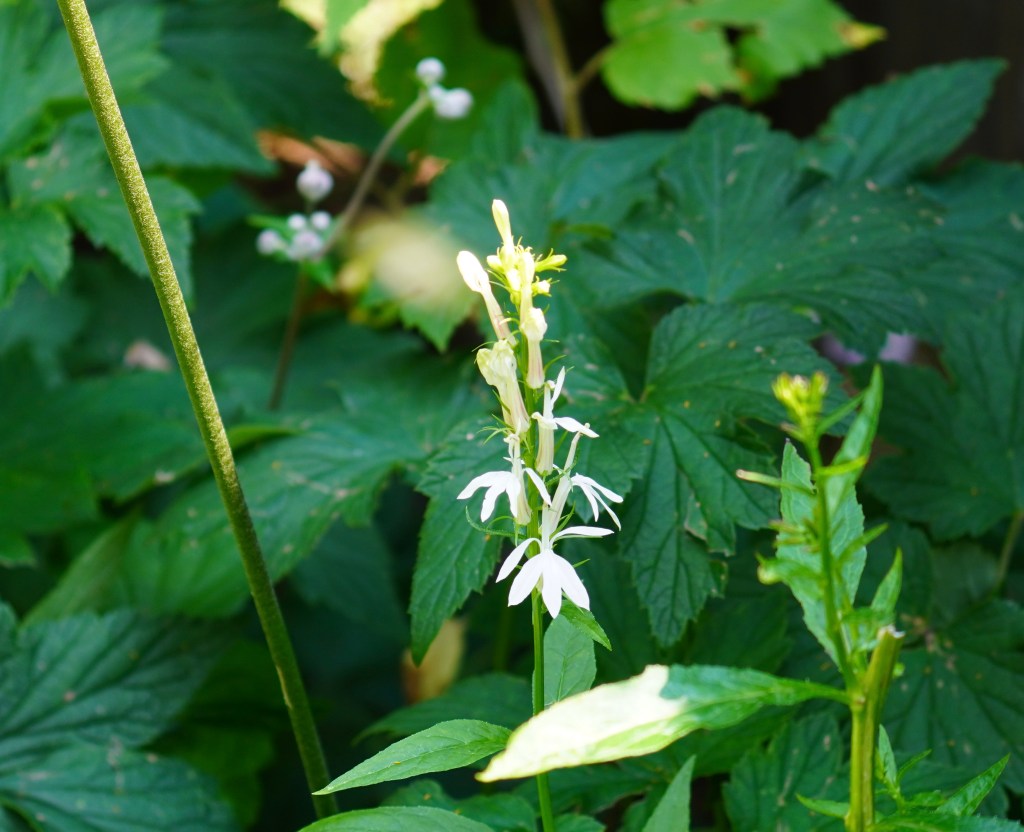
White and red Cardinal Flowers (August 22, 2023)
I grew Cardinal Flowers from seed last year. A couple of them has white flowers instead of red.
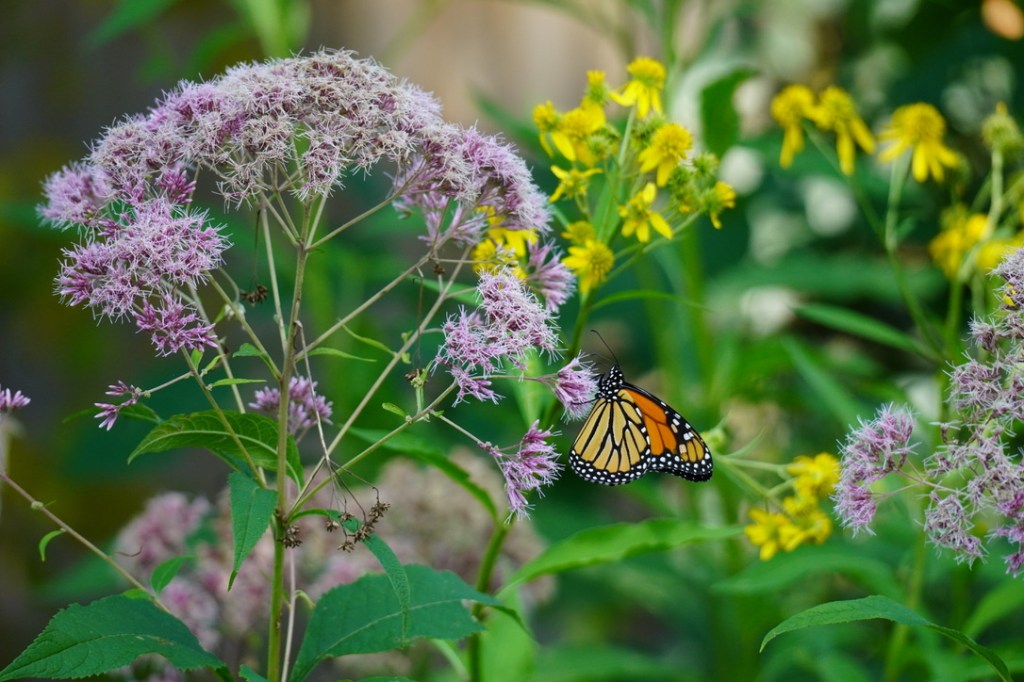
Monarch visiting Sweet Joe Pye (August 22, 2023)
We released the first of the Monarch butterflies I raised outside in mesh cages. I rescued 4 eggs from Swamp and Common Milkweed to ensure that at least a few of them made it to adulthood. Here it is visiting Sweet Joe Pye Weed. Golden Honey Plant/Wingstem is in the background.
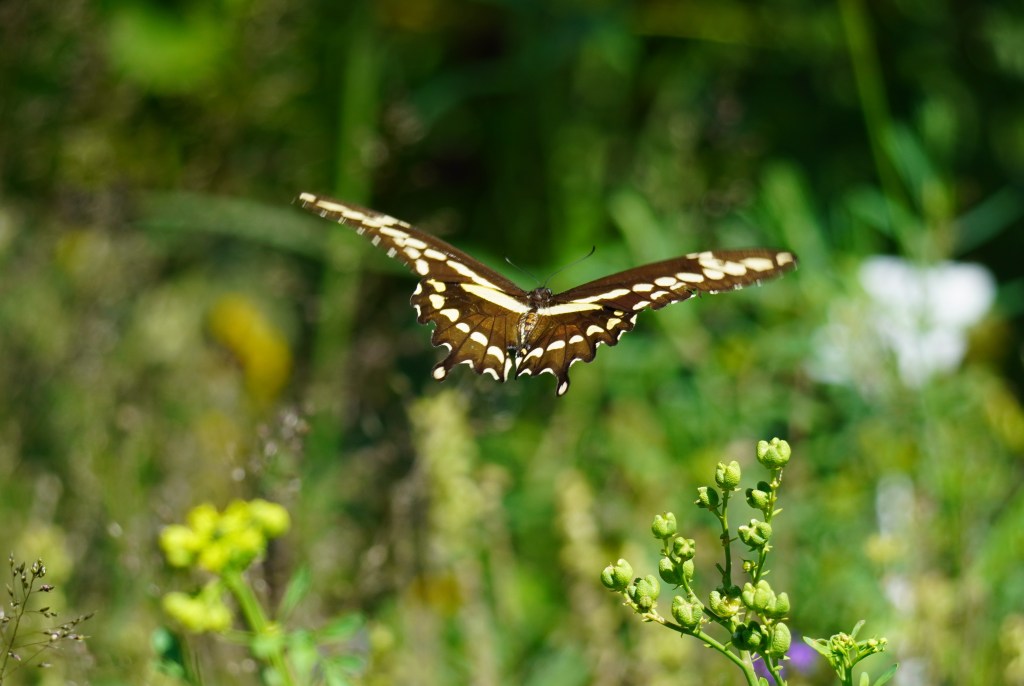
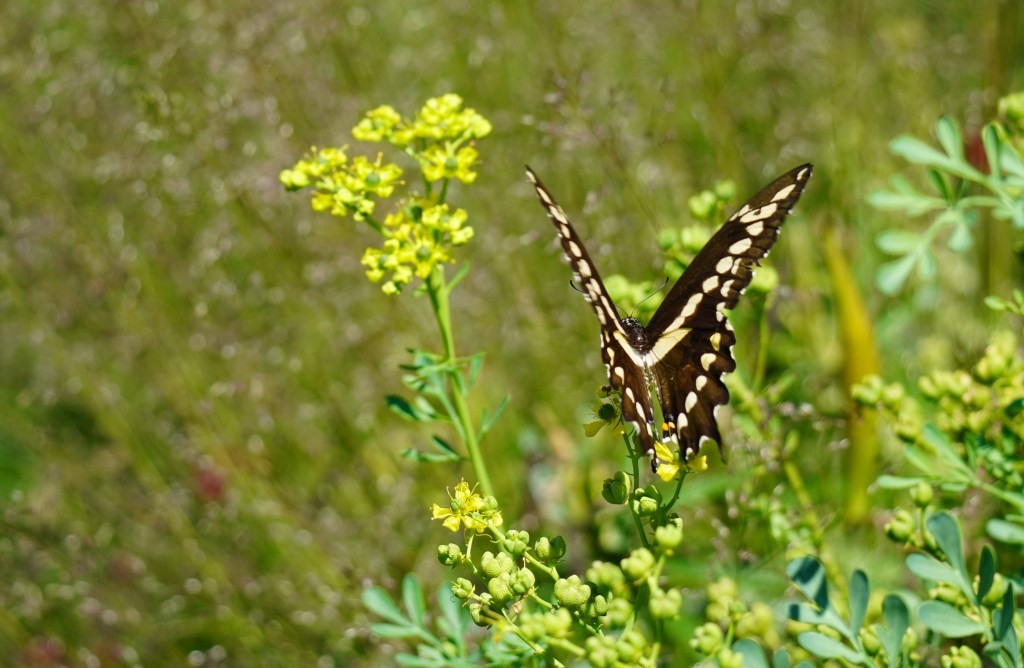
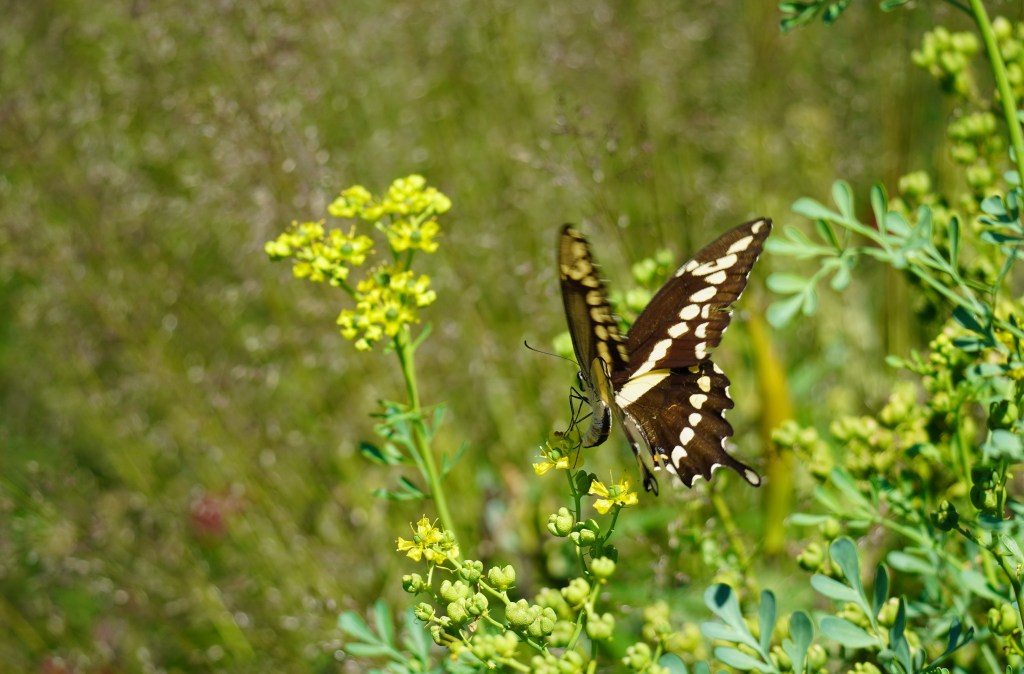
Giant Swallowtail laying eggs on Rue (August 22, 2020)
I saw a Giant Swallowtail a few times this summer. She floated around the front and back gardens looking for a place to lay eggs. I assume she laid some on our Hop trees in the hedgerow, one of its native host plants, but I did see her lay eggs on non-native Rue.
These are photos I took a few years ago of a Giant Swallowtail laying eggs on Rue in the front garden.


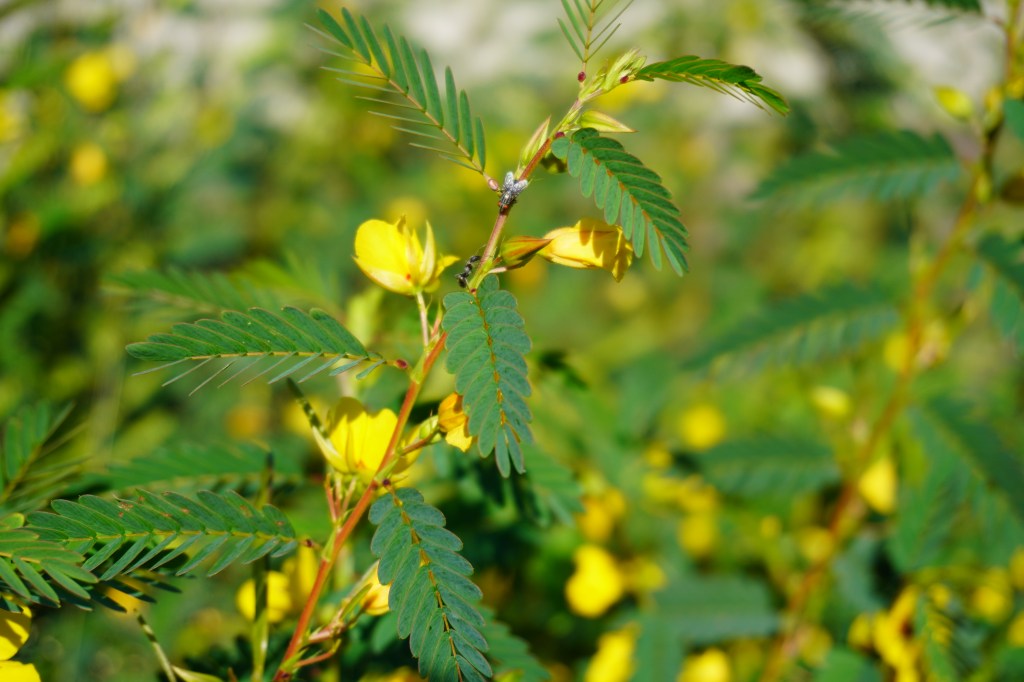
Partridge Pea Buffet (August 22, 2020)
The sunny yellow flowers of this native Prairie annual open each morning and are covered in bumblebees. The flowers only offer pollen, so I assume that the bees are workers provisioning their nests.
Lots of other insects visit Partridge Pea too. They’re looking for nectar. Wait a minute. Why are these insects on Partridge Pea plants when the flowers have no nectar? Well, the stems offer nectar in little red bowls, called extra-floral nectaries. The Paper Wasp in the third photo is drinking nectar from one of the bowls. Ants and flies hung around waiting their turns.


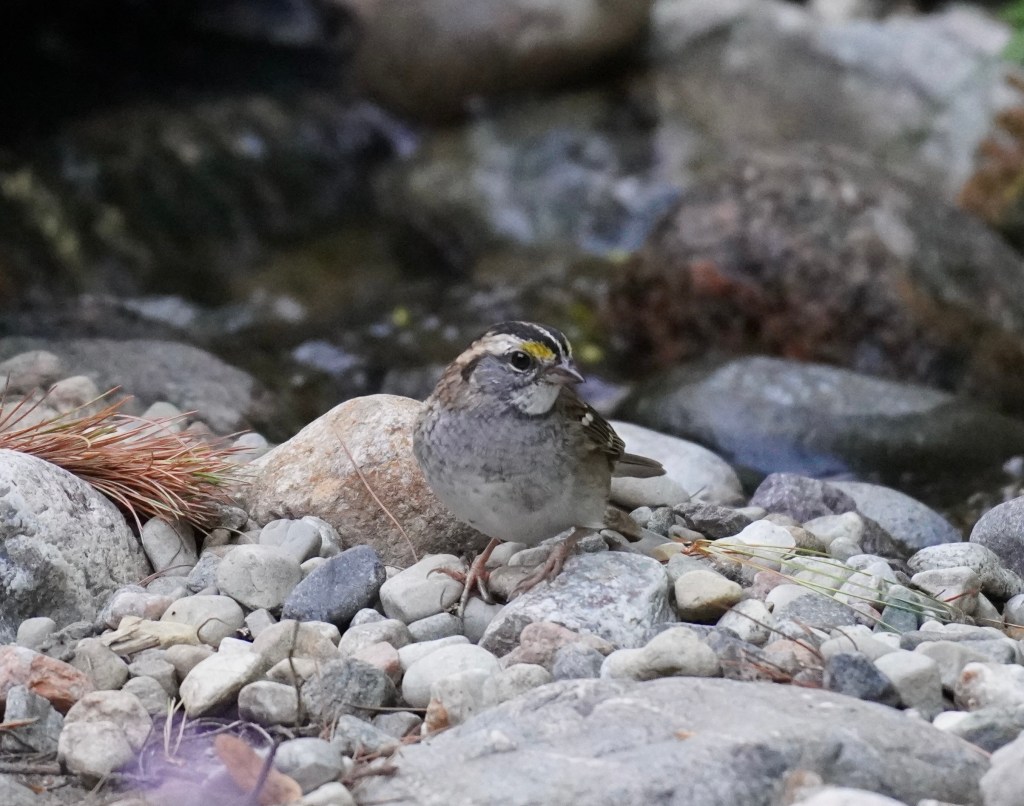
Lone White-throated Sparrow (August 28 & 31, 2023)
I was surprised to see this White-throated Sparrow hopping around the mini-meadow eating seeds and visiting the stream. I think they usually arrive later and in a flock.

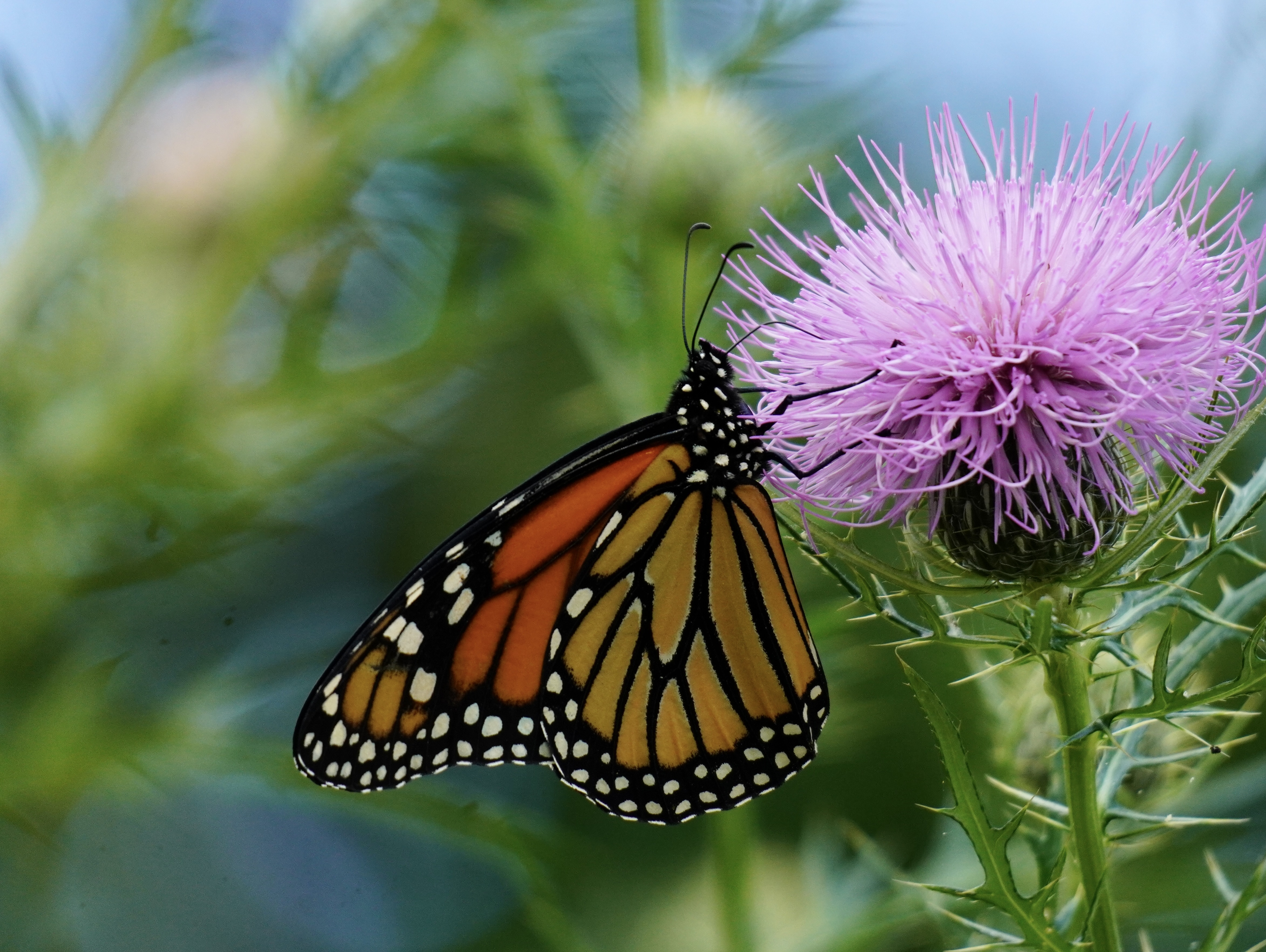
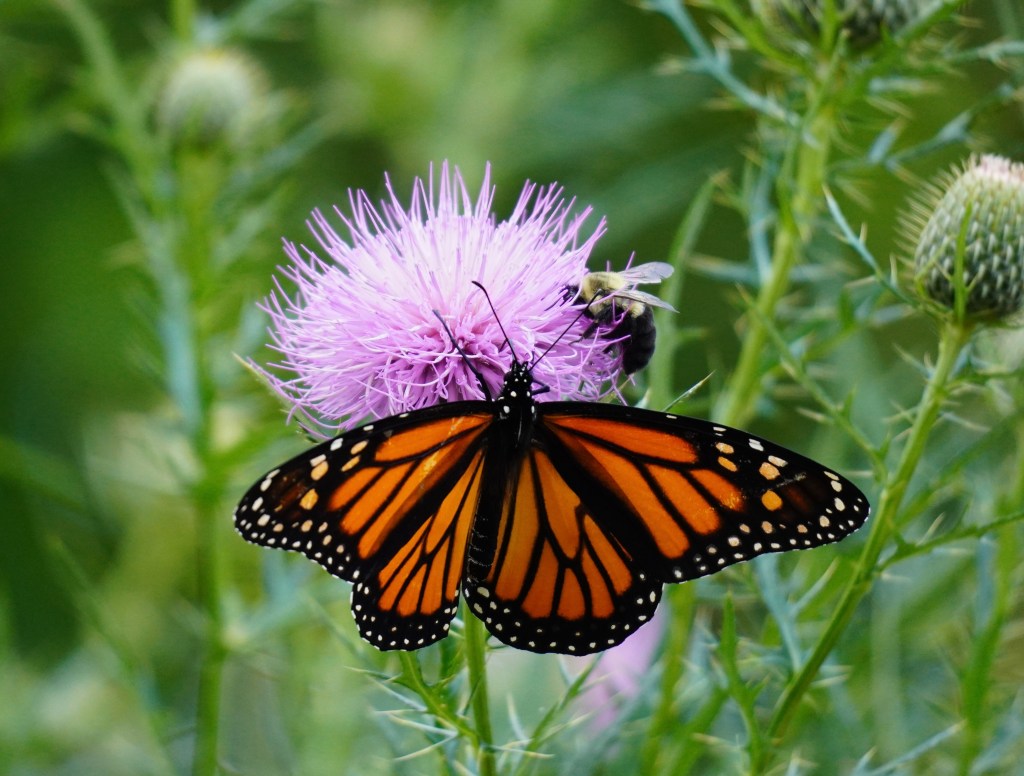
Pasture Thistle (August 20 & 28, 2023 and August 29, 2022)
This year, my native Pasture Thistles (aka Field Thistles, Circium discolor) are like trees, standing at least 10 feet tall. A few of them fell over in a hail and wind storm last month, but the remaining ones are now in full bloom. The flowers are very busy with bumblebees and the occasional Monarch.
Goldfinches also love to eat Pasture Thistle seeds. The last photo features a male Goldfinch from last summer.




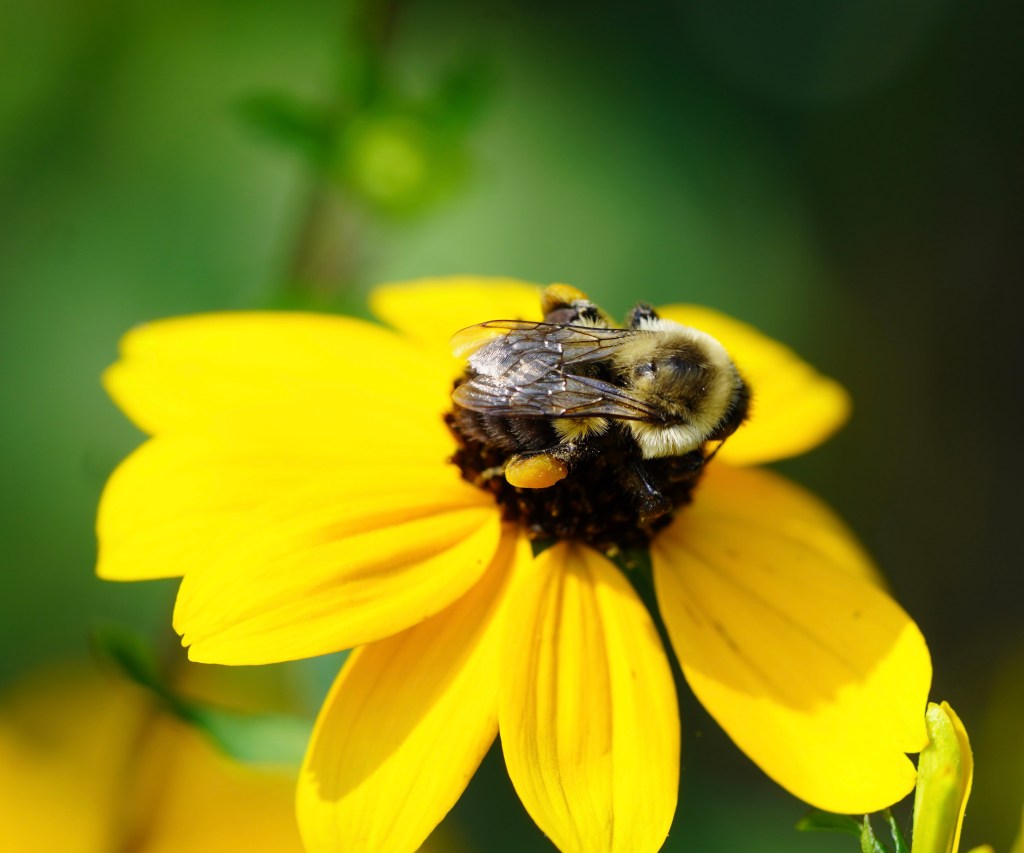
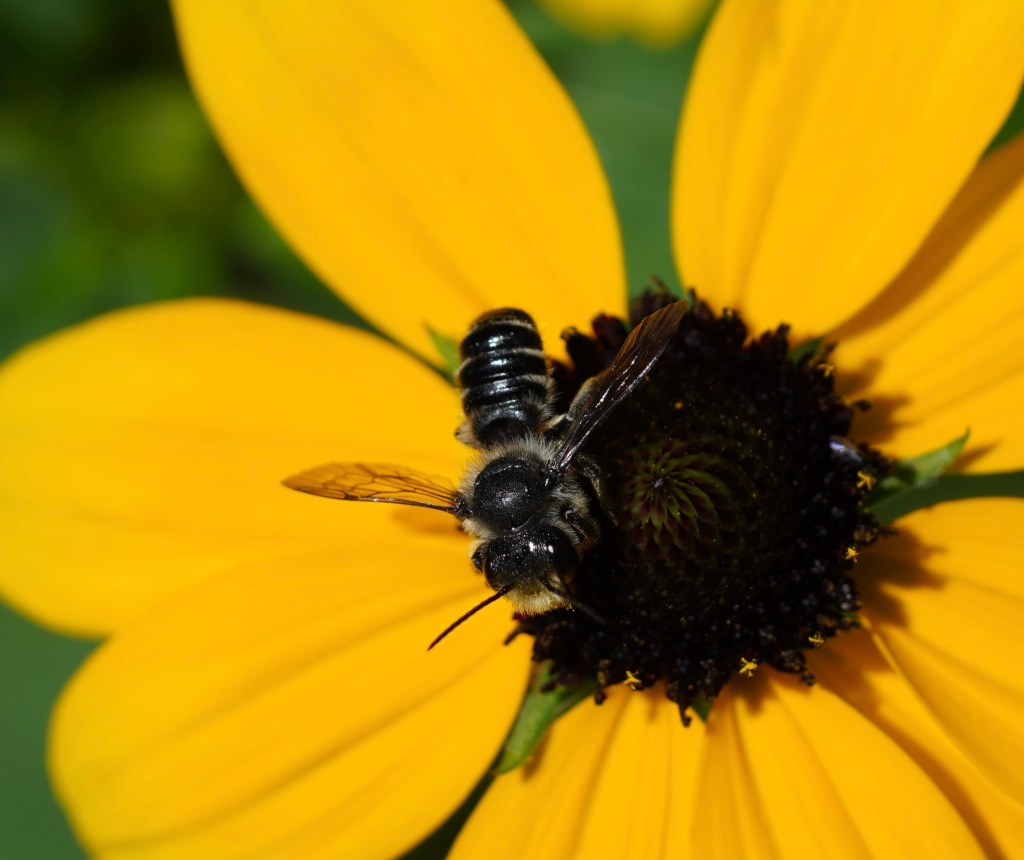
Pollinators on Brown-eyed Susans (August 11 and 22, 2023)
Here a few of the pollinators I’ve seen visiting Brown-eyed Susan flowers (Rudbeckia triloba) in the back garden:
1 and 2 are bees,
3 and 4 are flies,
5 and 6 are a leaf cutter bee with an impressive moustache (last photo).



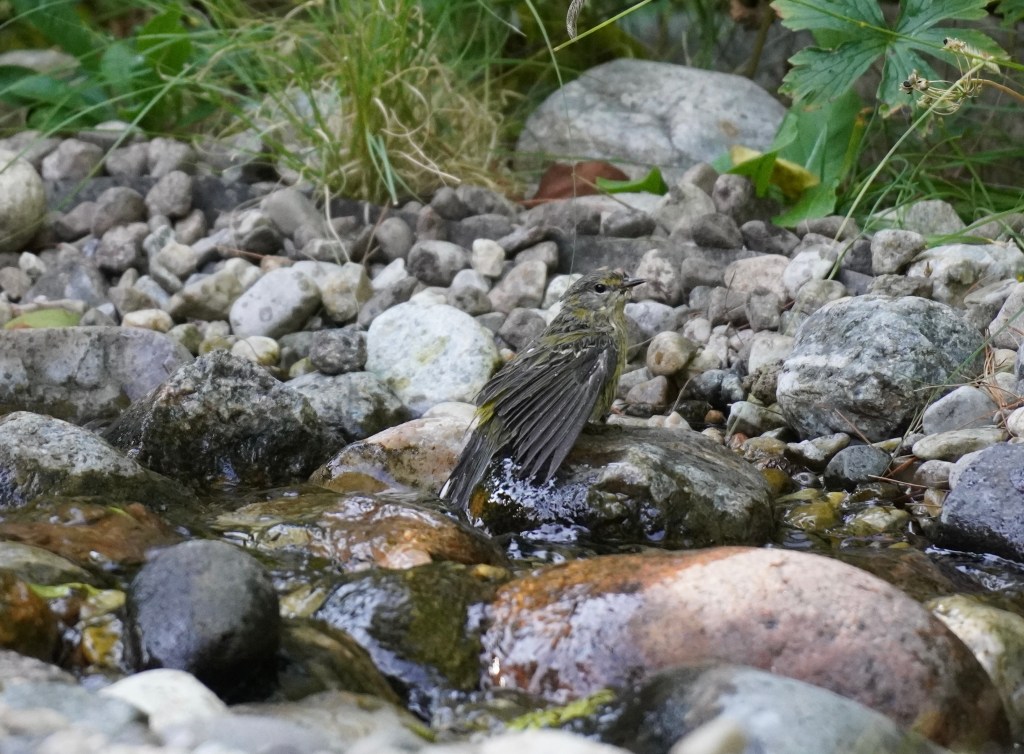
Everyone likes Chickadees — even this Cape May Warbler (August 29, 2023)
This Cape May Warbler hung out with a Chickadee at the stream. It’s no wonder because Chickadees are such curious, friendly little birds.



 The Corner Pollinator Garden and Wildlife Habitat
You made my day we these updates! Thank you for all you do.
LikeLike